
Fall Edition
New Title
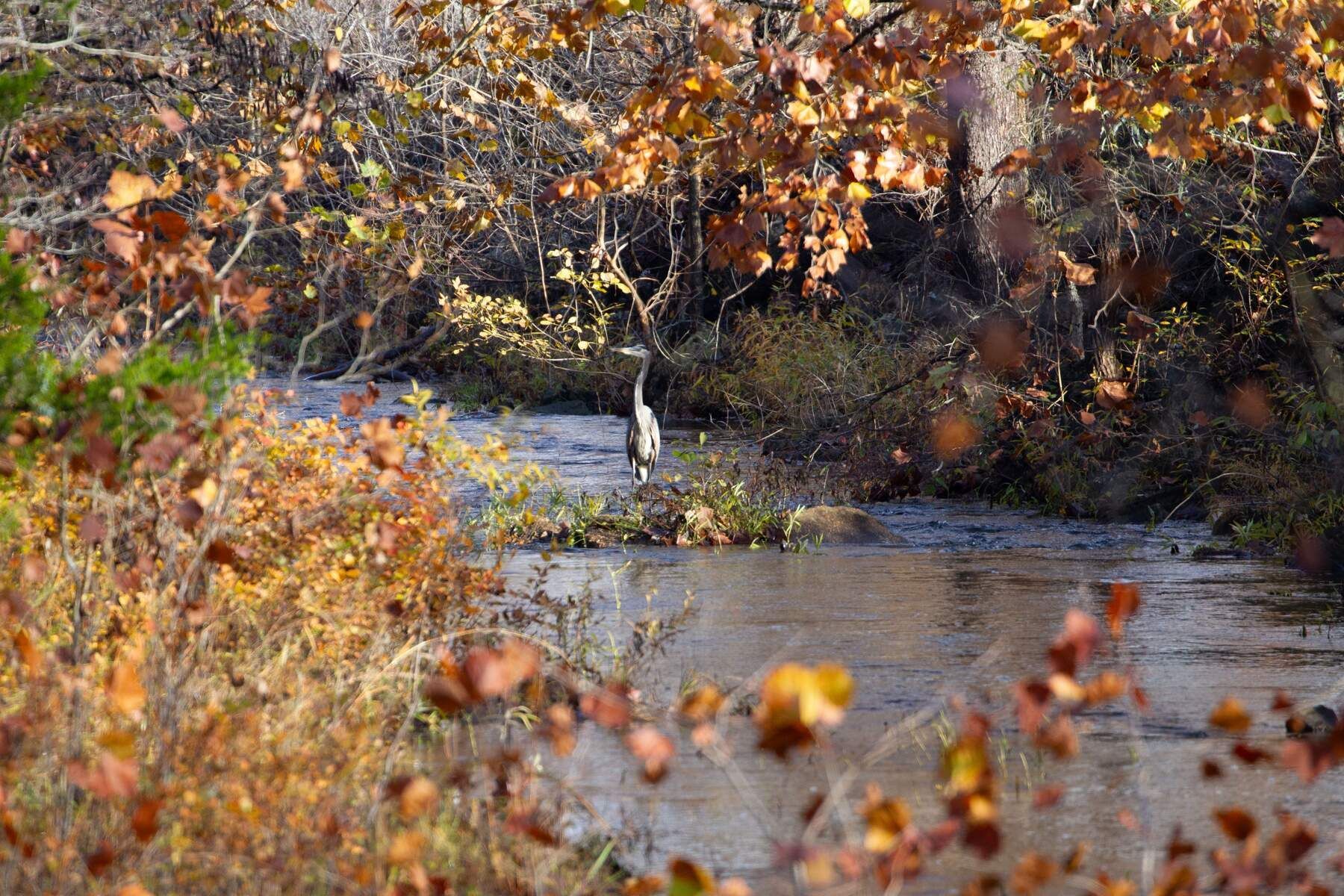
Learn to appreciate fall color with Jeff Cantrell
Those calming moments are coming into color
By Jeff Cantrell, Volunteer Engagement Specialist
Featured above is Indian Trail Conservation Area at peak fall color.
The fall season often brings a quieter time on the streams and rivers. Just the theme of the season brings renewed interest in the native trees along our favorite floats or sought-after fishing spots. Missouri Stream Team volunteers who adopted litter pick-up, habitat projects, and stream monitoring areas may have continued interest in the riparian area. Those Stream Teamers may select taking inventory of the site for all the benefits of trees as well.
No matter if the admirer is floating by, fishing along the shade, or working in the stream it’s fun to learn about these important contributors to our aquatic food webs and environment. They help hold the stream bank and slow erosion. Their shade is important for cooling the water in the summer and providing important conditions for native fishes and invertebrates. Lastly, their dropped leaves and mast (seeds, nuts & fruits) deliver nutrients to the stream’s abundant lifecycles.
So, during these quieter times on the river it’s the perfect pastime to take in the beauty. Missouri’s fall color display began with sumacs and buckeyes being among the first to change. The peak colors often hit in late October and depending on the regions of the state some oaks, hickories and the sweet gum may be glorious into early November.
Those quiet times in the calm backwaters may prompt a story to accompany the autumn masterwork. A quick version of a campfire story commonly shared in the Ozarks is one passed down by our Native American predecessors and our respected heritage. It’s the story of a great bear, and whose formable presence brought concern to the people. So, the people decided to hunt down the great bear along the forests of our region. Legend tells this trailing the bear and the hunt itself lasted for the autumn season. Not one individual hunter could bring it down, so several pursuers cast spears or shot arrows, wounding the great bear. Before the bear fled to the sky to be among the stars it left many a sign among our wooded landscape. The red- and burgundy-colored leaves on our dogwoods, black gum, sumac, and others will symbolize the shed blood from the mythical pursuit. And the yellows we see on the foliage of hickories, ash, hackberry and others are from the dripping fat from the great “story” bear. Wonderful tales have accompanied quiet times in nature for humankind for eons. We hope our Missouri Stream Team volunteers and other nature enthusiasts enjoy this beautiful season on or around our wild waters. And certainly, enjoy some stories and legends of your own as the leaves change this month and float along on the waters you work hard to manage and protect.
Our Team Welcomes Hannah Griffis
meet the newest member of our team
A Foreword by Rebecca O'Hearn, Volunteer Programs Manager
I’m pleased to announce our newest Missouri Stream Team staff member, Hannah Griffis. Hannah started serving as Volunteer Citizen Science & Education Coordinator in mid-September!
Hannah holds a B.S. and M.S. in Biological Sciences from Southern Illinois University Edwardsville, where she graduated with high academic achievements. During her graduate studies she researched microhabitat selection and feeding behaviors of white-footed mice in rural environments and served as a Teaching Assistant for undergraduates.
For the past five years Hannah has worked as the RiverWatch Volunteer Coordinator at the National Great Rivers Research & Education Center. In that role, she led volunteer water quality monitoring efforts, collaborated with Illinois Master Naturalists, oversaw the work of part-time college students and contractors, and coordinated with both internal and external partners.
Please join me in giving Hannah a warm welcome to Missouri Stream Team!
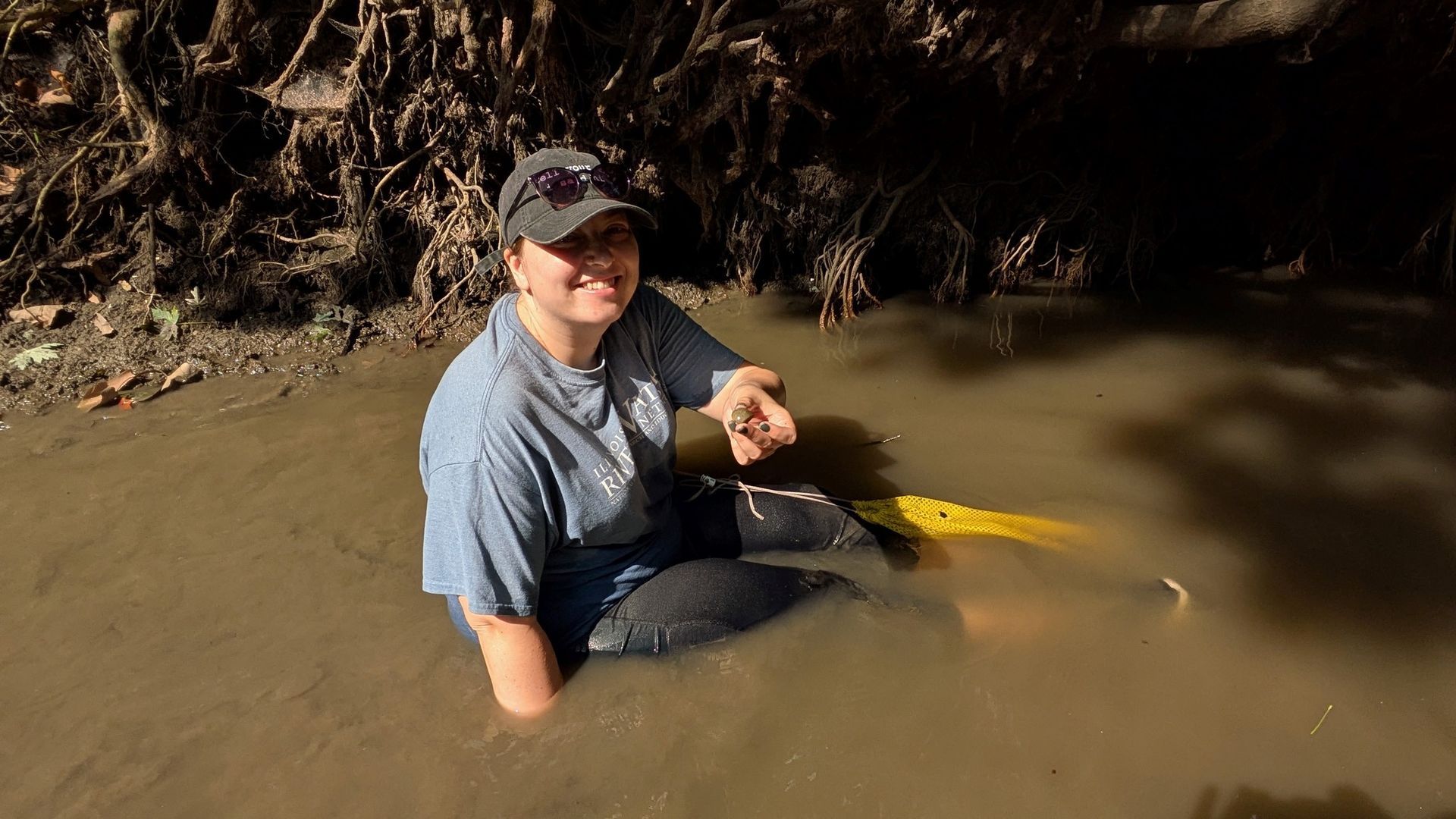
Hannah in a stream holding invertebrates.
Meet Hannah Griffis, Volunteer Citizen Science & Education Coordinator
Hello! I grew up in northern Illinois, about 40 miles south of Chicago. My father is a long-term water quality volunteer with the Illinois state program. I grew up helping him collect water quality data in our local creek, although, at the time, I thought I was just helping him catch bugs. This led to me participating in undergraduate research that focused on habitat selection of macroinvertebrates. I achieved my Bachelor of Science in Integrative Biology and my Master of Science from Southern Illinois University Edwardsville. My master’s research focused on habitat selection and feeding behaviors of white-footed mice.
After graduating, I went back to my roots and began working as the Volunteer Coordinator for Illinois RiverWatch. I spent 5 years with RiverWatch where I scheduled and conducted training workshops, connected with volunteers, launched new programs, and provided several kinds of educational programming. I also assisted with several other programs, including Winter Chloride Watch, Sangamon River Mussel Monitoring, and Illinois Crayfish Watch. I formed many connections with the Illinois RiverWatch volunteers and I look forward to forming new connections with the volunteers of Stream Team!
In my free time, I am a nature lover, board game enthusiast, amateur chef, and a cat mom.
- Hannah Griffis
Email: Hannah.Griffis@mdc.mo.gov
Learn about low macro levels in our latest Monitoring Minute
Where did all the macros go?
By Tabitha Gatt-Hendricks, Stream Team Volunteer Water Quality Monitoring Program Coordinator
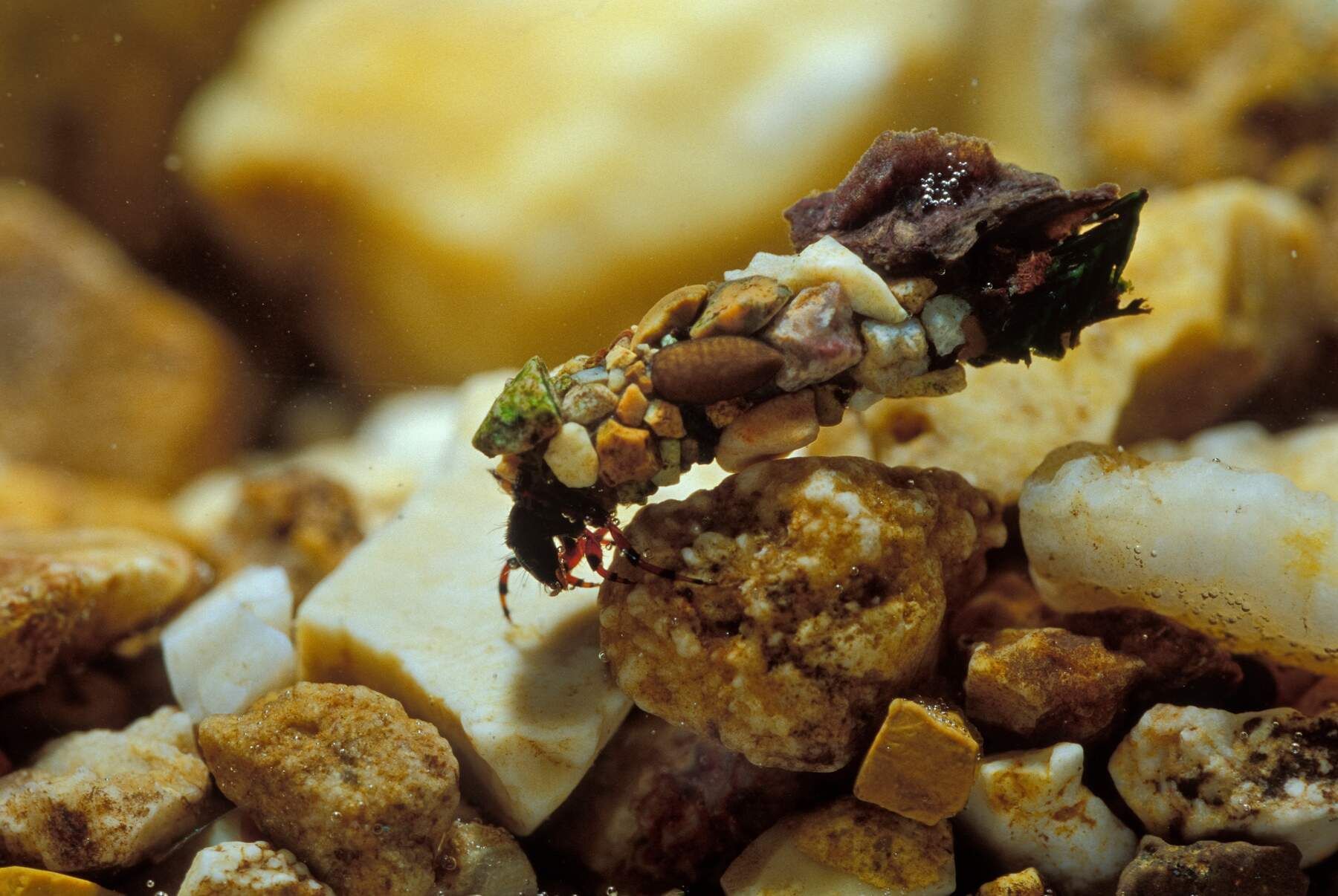
The picture above is of a Glyphopsyche (Genus) caddisfly larvae taken by Jim Rathert, Missouri Department of Conservation.
During our biannual Spring VWQM workshop on Grindstone Creek in Columbia, MO, we collected three macroinvertebrate net-sets during our training. However, the results this time were quite different from what we would normally expect from this stream! Despite its urban setting, Grindstone Creek has historically been home to more sensitive organisms like stoneflies and mayflies. This time, however, our nets turned up almost entirely empty! Where did all the macros go??
Collecting unusually low amounts of macros in your net-sets may happen for several reasons. Let’s talk about just a few of them:
Drought and water level: Macros are aquatic organisms, so if they don’t have the water, then they can’t live! There are some organisms that can withstand dry periods more than others, but especially sensitive organisms (like the mayflies and stoneflies) will not survive streams drying up. It’s good to have an understanding of the normal water levels and flow in your stream so that you can tell if the water is relatively low and might be affecting the macro community.
Recent heavy rainfall: Macroinvertebrates are like river nomads. They can drift and flow downstream to settle into nice patches of food and habitat during their life, creating temporary “macro cities” that have a variety of inhabitants. Fast-flowing and heightened water levels can wash these macros away downstream, where it may take a while for them to rebuild a new settlement where they came from upstream. If you go out to collect macros within a week of a heavy rainfall, you may not collect the same amount or variety of macros as if you were to wait a few weeks instead.
Increased pollution: Macros require certain levels of water quality to survive and thrive. Land use changes and practices around streams can sometimes negatively impact the water quality, which in turn may affect the ability for macros to live and reproduce in streams. There can be a specific pollution event, like a chemical spill, that may wipe out entire populations of macroinvertebrates. Another cause could be a systemic change in the watershed that is degrading their habitat over time, like increased impervious surfaces that cause more water to runoff into nearby streams during rain events.
My main hypothesis for not seeing many organisms in our net sets on Grindstone Creek was the the lack of constantly flowing water at normal water levels. We encourage our water quality monitors to become familiar with the macros that you would normally see at your stream so that when any changes happen, you are better able to spot them and note it with your data.
Catch up with teams around the state with the Riffle Review
Riffle Review - 7,090 Teams strong
A quarterly glimpse of Stream Team activities - in the last quarter, Missouri Stream Team volunteers reported:
- 244 Total activities
- 1,299 Total participants
- 4,668 Hours
- 16 Tons of trash collected
- 66 Water quality monitoring trips
Team Snapshots
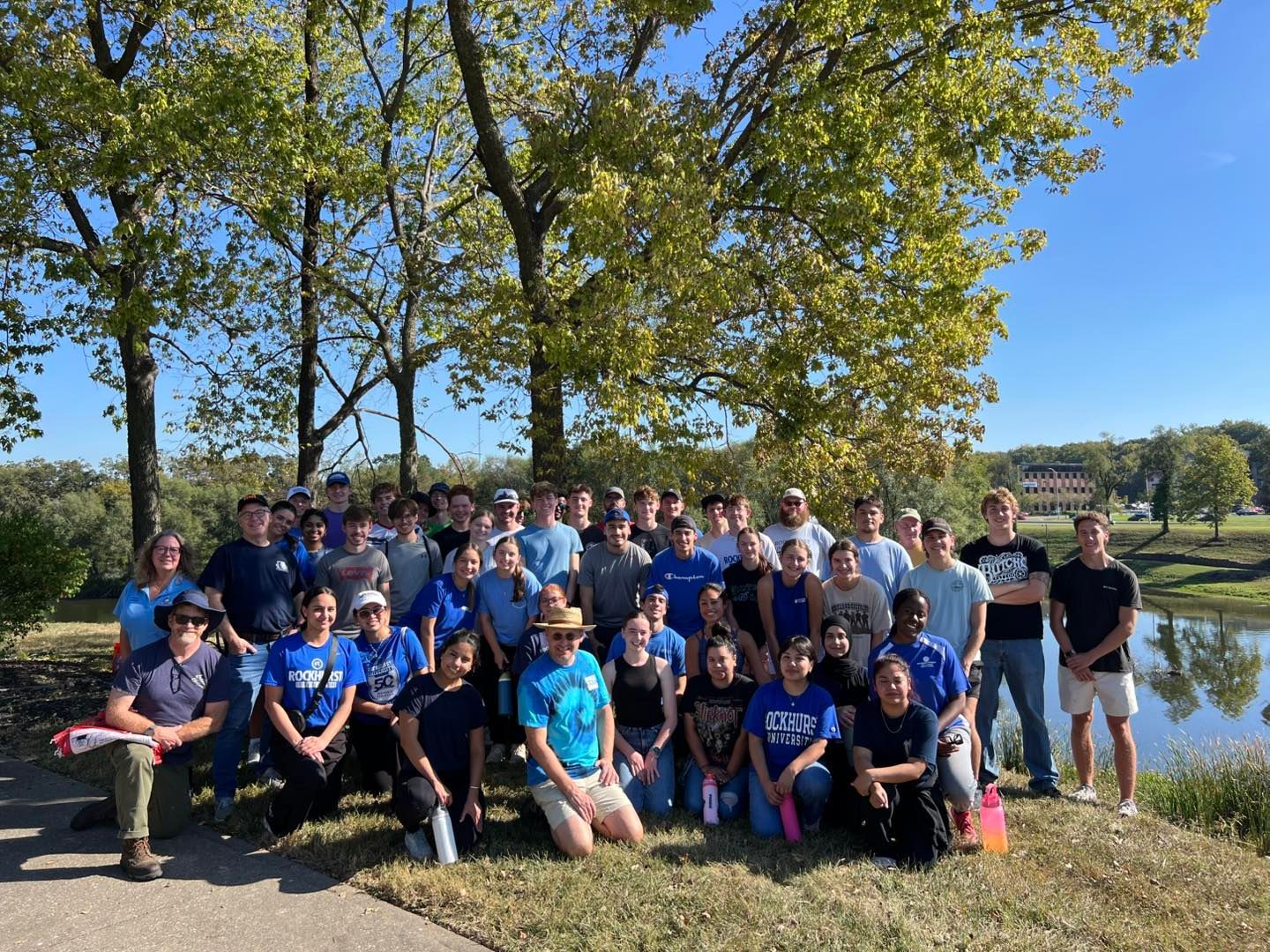
Rockhurst University – ST#6897
The Volunteer Engagement Assistant out of Kansas City, Sheryl Vasquez, partnered with the Student Senate from Rockhurst University and Kansas City Parks on October 10 to host 50 students in a litter pickup of Brush Creek in Kansas City. Sheryl provided canoes and led safety for students on the water, where students picked up 27 green mesh bags of trash. The students also hosted a social after, with free hot dogs, chips, and desert for all participants, with music and prizes Sheryl provided.
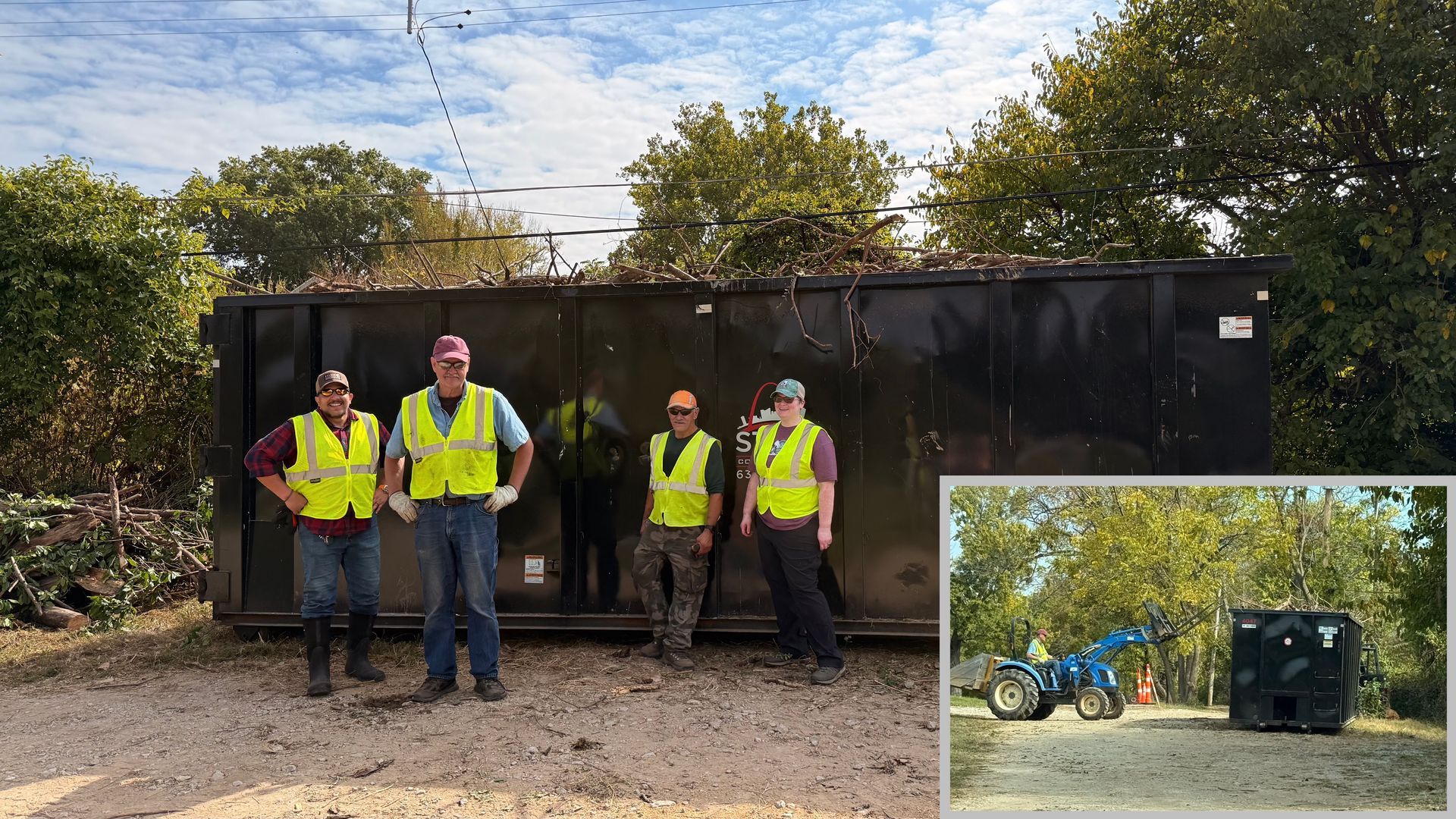
Combined Team Effort - Stream Teams #168, 211, 463, 4922, 6096, & 6708
With or without the Nightmare in the Understory Honeysuckle Challenge, the honeysuckle problem remains. Nowhere is it more obvious than at Greenwood Cemetery, the first commercial, non-religious cemetery for African Americans in the St. Louis area, where the fight against many invasive plants continues.
In October 2025, Beyond Housing Stream Team 6096 launched the Community Conservation Days Event to bring together neighborhoods and residents for a three-day Take Back Our Communities Clean-Up, including invasive plant removal. At the cemetery, The Great 168, The Mighty 211, The Greenway Network ST 463, The Tireless Cutters ST 4922, and Greenwood Cemetery Preservation Association ST 6708 worked together to clear the honeysuckle blanketing the cemetery and more than 50,000 gravesites.
A combined team effort is the only way to describe what took place in October 2025. In a mere three hours, over one ton or 40 cubic yards of honeysuckle was removed. Families of the deceased can now visit their ancestors in peace and comfort.
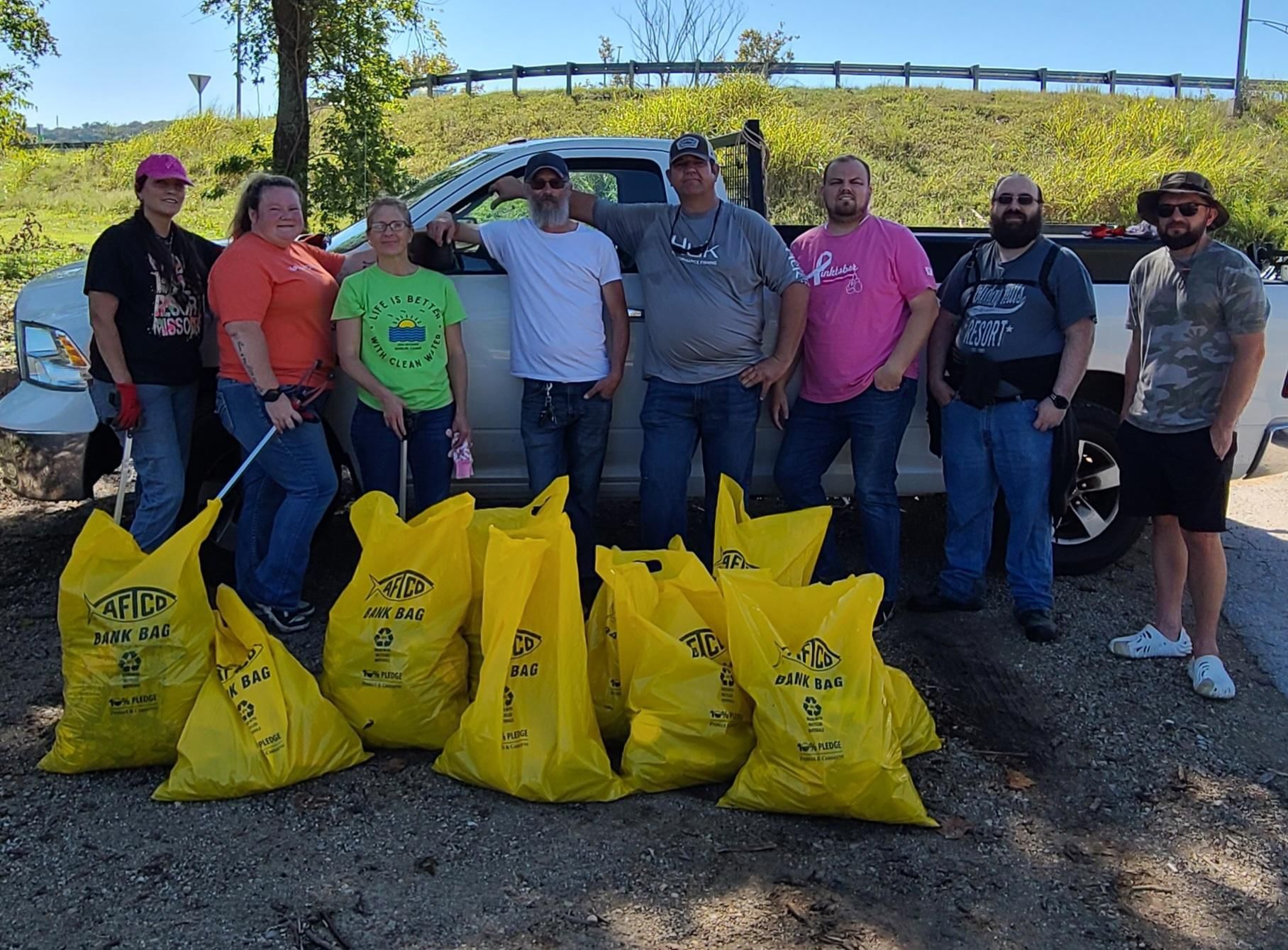
H2Ozarks Stream Team - Stream Team #6979
The White River watershed and the Table Rock Lake area continue to benefit greatly from the united efforts of the H2Ozarks volunteers. The last weekend of September the team hosted their annual H2Ozarks Shoreline Cleanup; they divided up into 39 sub teams consisting of a total of 521 individuals. They contributed a total of 1,394 volunteer hours and collected 5,465 pounds of trash including 30 tires and three appliances. The Table Rock Lake region continues to be a gathering place for fishing, recreation, and relaxation in nature because of wonderful efforts like these. For stewardship and being outstanding role models - Thank you!
The 100 Club
A highlight of Teams that have contributed more than 100 hours in the last quarter -
| Team Number | Team Name | Hours |
|---|---|---|
| 2763 | Jefferson County Stormwater | 528 |
| 3895 | Manchester Parks Department | 520 |
| 7015 | Community Learning Center | 225 |
| 5168 | League of Watershed Guardians | 186 |
| 5645 | St. Francois Brigade | 183 |
| 6285 | Project Restore | 168 |
| 7057 | WOLF Stream Learning | 132 |
| 6160 | Trash and Treasures | 124 |
| 3714 | Shoal Creek Conservation Education Center | 120 |
| 2428 | Little Blue River Watershed Coalition | 110 |
| 6796 | Peruque Creek Watershed | 108 |
Nightmare in the Understory
Nightmare in the understory - A honeysuckle hack challenge
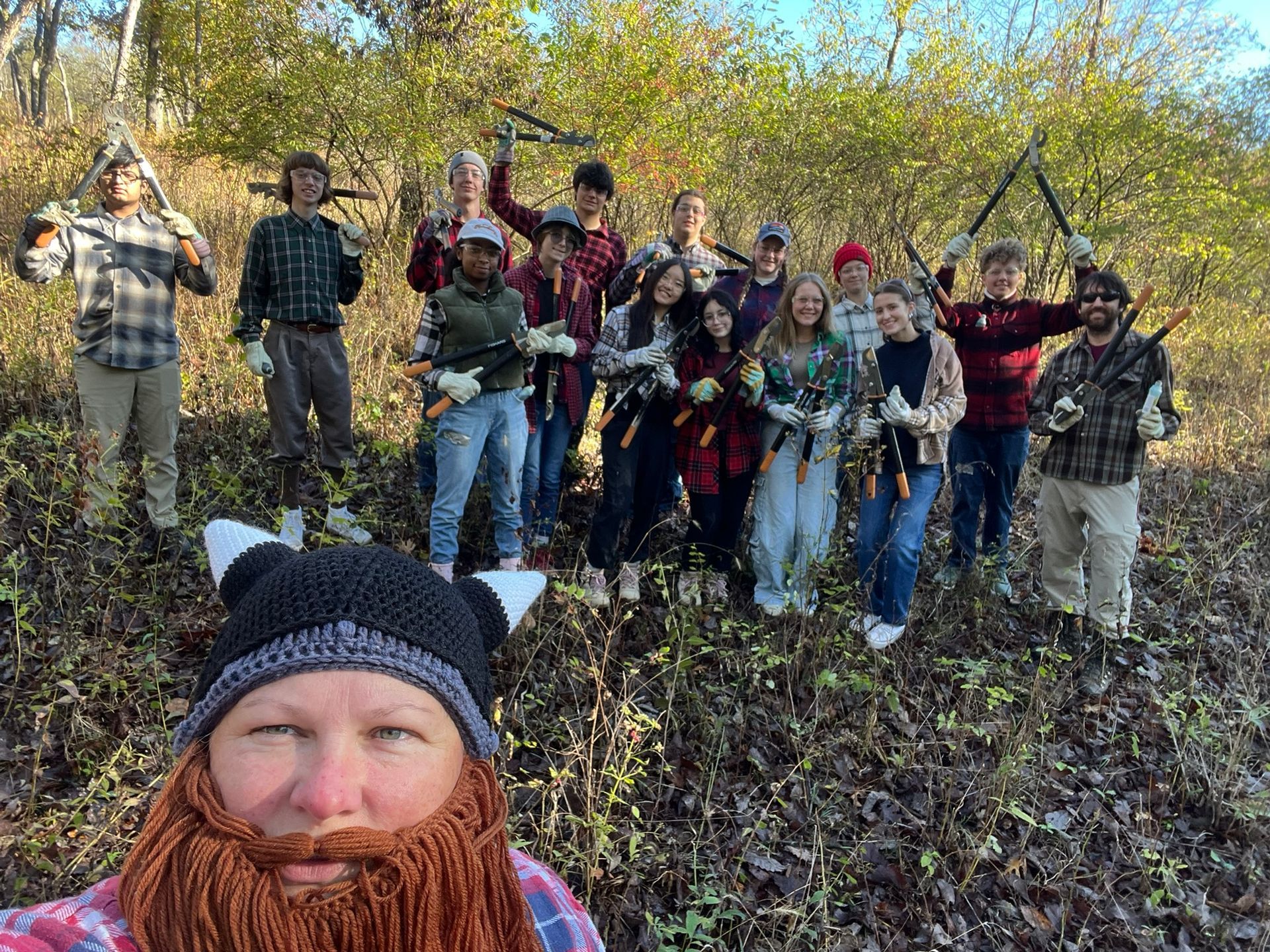
Featured above is Missouri Stream Team #1343, the Shaw Nature Reserve Team, winners for the best dressed prize category in the statewide Nightmare in the Understory challenge.
statewide totals - 104 participants, 234 dedicated hours, & 122,792 Square feet
Thank you to everyone who participated in our new October Challenge, Nightmare in the Understory! We challenged you to get outside and hack as much honeysuckle as possible in the month of October and you rose to the challenge!
A total of 104 volunteers, 234 hours of service, and 122,792 sq ft (2.8 acres!) of invasive bush honeysuckle removed statewide!
Now for the winners…
🪓Most Square Footage Hacked
1st Place: Team 4922 – The Tireless Cutters - 74,052 sq ft hacked
2nd Place: Team 4529 – City of Jefferson Stream Team - 31,798 sq ft hacked
📷Best Before & After Pic
1st Place: Team 6668 – Blue River Woodlands - for an amazing timelapse video
2nd Place: Team 6668 – Blue River Woodlands - for an excellent photo
🌳Largest Single Plant Removed
Team 7092 – Wana removed a 20-foot-tall bush!
🧌Best Dressed
Team 1343 – Shaw Nature Reserve — for their fantastic costumed lumberjack crew
And what about those prizes...
Winning teams had their pick of a $100 gift card to Missouri Wildflowers Nursery to replace those nasty invasives they removed, a $100 gift card to Lowes for more hacking equipment, or a honeysuckle popper to pop out any new honeysuckle plants next spring.
Huge congratulations to our winners and THANK YOU to every Stream Teamer who grabbed loppers, saws, gloves, and friends to take on this invasive plant. Missouri’s streams and watersheds are healthier because of you!
Save the date for next October, when we hope to expand the challenge in our 2nd year!
Get Excited about Activity Prizes
QuarterLY Activity Prize Drawing - Prizes for Last QUarter

Quarter Prizes:
- Vortex, Binoculars, 10x50
- Magellan, Daypack, Camo
- Mainstays, Food Containers, Stainless Steel
Quarter Youth Prize:
- 3-Pack Kit: Night Sky Finder, Outdoor Adventure Cards, & Field Day Camp Cards/Dice Set
Fill out an Activity Report for your past or upcoming events, and you could win a prize next quarter!
If you ordered supplies in advance, please don’t forget to report your accomplishments after your event. Missouri Stream Team relies on your reporting to continue to get funding!
Read the Latest Coalition Corner
Coalition corner

Advocating for Water during Politically Divisive Times
By Mary Culler, Executive Director of Stream Teams United
If you have seen me speak at a public event before, I often talk about the Missouri Stream Team family, and how we are made up of people with differences, like any family is, but we are similar in our common love of Missouri’s rivers and streams and our passion and enthusiasm for doing our part to conserve and improve Missouri’s waters for future generations. What makes Missouri Stream Team members “family” is not genetics (although some Team members are related), but instead it is our common drive to be stewards of Missouri’s land and waterways.
State and federal policy that provides for clean and abundant water should be a non-partisan issue. A society cannot function well without clean and abundant water. Without clean and abundant water, public health and economic vitality will decline. In Missouri, we have been blessed with abundant and clean water, so much that our water resources are envied by other states, and we undoubtedly have richer water resources than many nations in the world, just within our state’s borders.
As a 501(c)3 non-profit organization, Stream Teams United and other 501(c)3 organizations are required to be non-partisan by law, and cannot participate in elections or show support or criticism for candidates for elected office. 501(c)3 organizations, can however, advocate for or against proposed legislation, and can offer praise or criticism of policies of current elected officials, as long as those lawmakers are not currently running for re-election. Where does that leave us in 2025? As I write this article, it is the 36th day of the federal government shutdown, now the longest shutdown in U.S. history. Undoubtedly, there are people who align with all political views who are being affected in some way by cuts in federal spending, and the ongoing shutdown.
In Missouri, Stream Teams United is part of a team of advocates, through the Conservation Federation of Missouri, who are monitoring actions at the federal level, and working to communicate the highest priority conservation related issues to our members and the Missouri public. Missourians have shown time and time again, that regardless of our political stance, one thing we support as a majority, is conservation of land, water, habitat, and public spaces for outdoor recreation. Keep an eye out for the January 2026 Conservation Federation of Missouri magazine, that will outline the top federal policy changes or proposed changes that will affect land and water resources across the nation and in Missouri. As we approach the Missouri state legislative session in 2026, get to know your local elected legislators, and let them know your thoughts about conserving Missouri’s land, water, and wildlife.
-Mary Culler, Executive Director, Stream Team United