Fall Edition
New Title
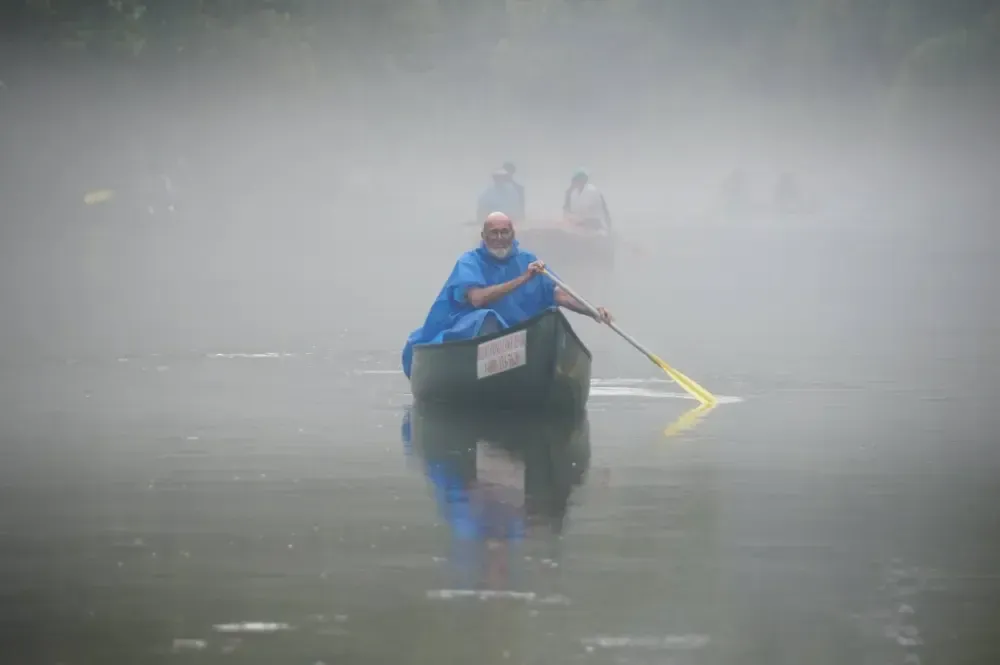
Remembering Joe Bachant, the Father of Stream Team
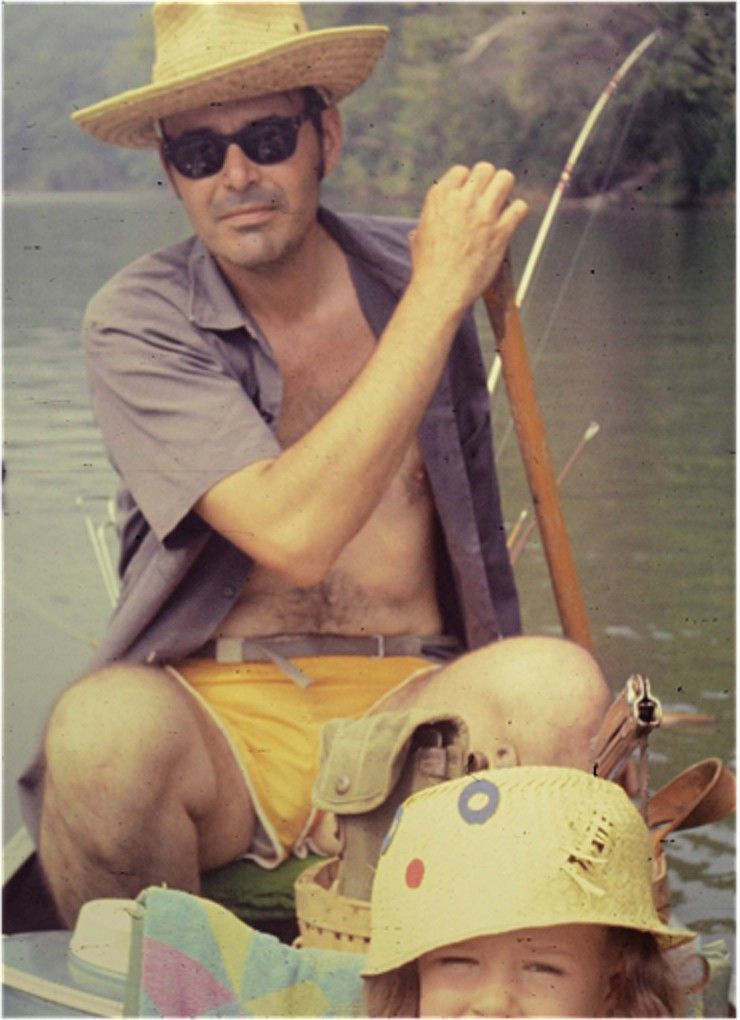
The Missouri Stream Team community mourns the passing of Joe Bachant, affectionately known as the Father of Stream Team. Joe was a visionary whose passion for Missouri's waterways and belief in the power of volunteers laid the foundation for a program that has connected generations of Missourians through conservation and stewardship. People like Joe, who possess the clarity to envision what is possible, the determination to bring that vision to life, and the ability to build a community to sustain it, are extraordinarily rare. Nearly four decades later, his vision continues to guide our work and inspire thousands of volunteers across the state. Joe may be gone, but his spirit lives on in every Stream Team and every Missourian who takes action to protect our waterways. We are deeply grateful for the legacy he leaves behind and extend our heartfelt condolences to his family and loved ones.
Joseph P. Bachant
Joseph Peter Bachant, 89, formerly of Holts Summit, MO, died peacefully at his home in Milton, FL on October 4 following a prolonged struggle with Alzheimer’s disease.
Joe was a loving son, husband, father, grandfather and great-grandfather. He was born July 8, 1937, in Clifton, New Jersey to Walter and Regina (née Kruers) Bachant. A sister, Regina Craney, preceded him in death. Joe is survived by his spouse of 66 years, Frances Bachant, by children Teresa Bachant, Jeff Bachant (spouse Constance Nugent) and Jennifer (JJ) Bachant Brown (spouse Edmund Brown), by grandchildren Kristina Adams, Ian Nugent Bachant, and Ariella Nugent Bachant, and by great grandchild Autumn Adams. He is also survived by a spoiled German Shepherd named Bella.
Joe graduated in 1953 from Passaic High School and attended Paul Smith’s College in upstate NY. He also served in the US Army Reserve. He earned a B.S. degree in Forestry from West Virginia University in 1960 and a M.S. degree in Wildlife Management from Virginia Tech in 1963. His professional career began with the US Forest Service, cruising timber in the White Mountains of NH. Joe next worked 9 years as a research biologist for the Ohio Dept. of Natural Resources. In 1972, the family moved to Holts Summit, MO, where Joe spent the next 30 years working for the Missouri Dept. of Conservation. Together with colleagues from MDOC and other agencies, political leaders and the public, Joe worked on numerous environmental issues, including saving the Meramec River as a free-flowing stream. One of Joe’s most enduring contributions was the founding of the Missouri Stream Team program, which became a prototype for citizen initiated environmental stewardship. Started in 1989, Stream Team is still growing, with over 7000 chapters dedicated to preserving Missouri’s scenic riverways. Indeed, it was his appellation as Father Steam Team that gave Joe his greatest sense of professional accomplishment.
Throughout his life, Joe was a man of varied interests: choral singing, building and playing stringed instruments, and being an outdoor sportsman. He loved botany, geology and ecology and would talk your ear off on these topics if you gave him half a chance. He was proud of his family and their accomplishments. But, in how life settled upon him, he was happiest in a canoe, paddling on flowing water, headed downstream. For those who knew and loved him, that is how he would want to be remembered.
A celebration of life is to be arranged. Memorial donations can be made to the Missouri Stream Team Program (https://www.mostreamteam.org/make-a-donation) or to the Florida Alzheimer’s and Dementia Research Center (https://1floridaadrc.org/donate/).
Memorial tributes to Joe can be published through the funeral home online tribute page. Obituary information for Joseph Peter Bachant
Watershed Planning and the Peruque Creek Watershed Alliance by Tabitha Gatts-Hendricks
Watershed Planning and the peruque Creek Watershed alliance
By Tabitha Gatts-Hendricks, 319 Nonpoint Source Grant Management Watershed Coordinator, Department of Natural Resources
How can people make a difference in their watershed? What avenues are available to people who want to see positive change in Missouri water quality? There are many answers to these questions—this article will only discuss a few of them. The 1972 Clean Water Act (CWA) serves as the federal and state legislative backbone for supporting water quality efforts. Missouri has an obligation to uphold the CWA by setting standards to protect water quality, evaluating water quality, and providing a path to restoration and protection. In Missouri, over 70% of water quality degradation comes from nonpoint sources—that is, precipitation runoff from land uses like urban and agricultural environments. This can be areas like parking lots/streets, parks, neighborhoods, and row crops and pasturelands. This stresses a great need to reduce pollution from nonpoint sources in Missouri because it is the major reason why there are water quality issues. Addressing nonpoint source pollution requires seeing the entire community, built and natural, not just a single stream. To capture this broad view, communities can use watershed-based plans (WBPs) and action supported by grant funding.
WBPs take a wholistic look at a watershed to outline what the pollution problems are, how much the pollutants in the watershed need to be reduced by, and the management measures and goals that need to happen to meet those reductions. Ideally, creating a plan for a watershed is a team effort with input from many different types of stakeholders: residents, farmers, businesses, local planning commissions, local governments, school boards, etc. When a plan is developed and accepted by the Missouri Department of Natural Resources (DNR) and the Environmental Protection Agency (EPA), it will be available for CWA Section 319 grant funding to implement best management practices (BMPs) and education/outreach outlined in the plan. These BMPs help to mitigate and remove nonpoint source pollutants from the watershed. Many times, the amount of funding available is far less than is needed to complete the plan so partnership participation and leveraging are necessary.
Recently, DNR has accepted a newly developed plan for the Peruque Creek watershed in St. Charles and Warren Counties. We want to highlight this plan and the partners involved because it is a good example of how people can come together to make positive changes in their local water resources. Peruque Creek has impairments for low dissolved oxygen levels and poor macroinvertebrate community health, and Lake St. Louis, within the Peruque Creek watershed, has an impairment for excessive nutrients. There is also excessive erosion along the banks of Peruque Creek that can cause nearby residents to lose or risk damaged property, and the resulting dislodged sediment flows into Lake St. Louis. The Lake must therefore be dredged on an increasingly frequent basis to maintain safe local recreational use. The watershed plan for Peruque Creek and Lake St. Louis discusses these impairments and lays out the BMPs that need to be implemented so that water quality is restored.
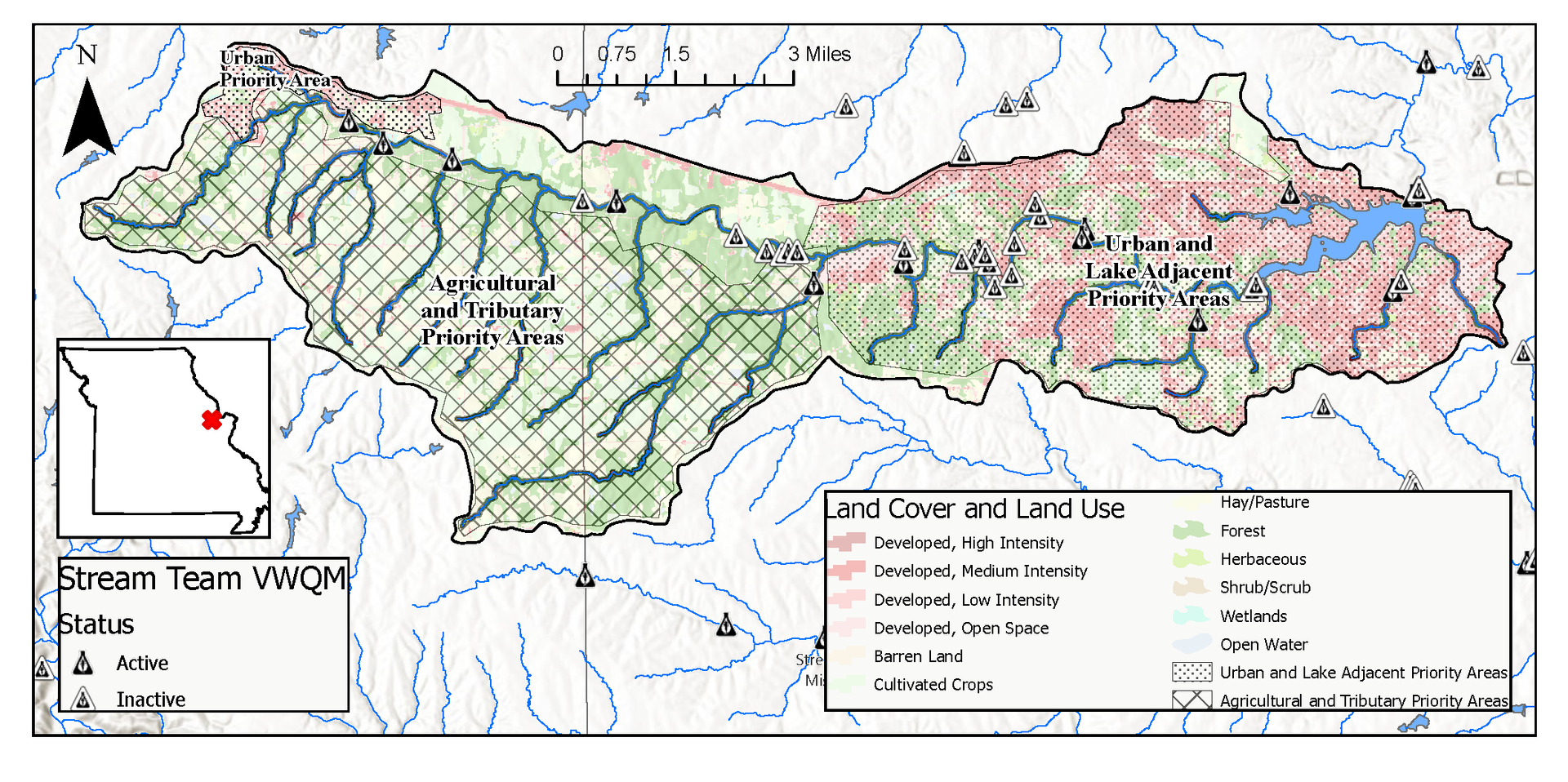
Featured above is a map of the Peruque Creek and Lake St. Louis watershed. Displayed within the watershed are the Mo Stream Team Volunteer Water Quality Monitoring Sites, and the Urban and Agriculture priority areas for BMP implementation that are outlined in the watershed-based plan.
The people in the Peruque Creek and Lake St. Louis watershed called for and spear-headed the making of this WBP. They attended several Stream Team VWQM workshops to learn more about water quality and how to monitor their stream. They began making connections with other stakeholders in the watershed who had similar goals to eventually form the Peruque Creek Watershed Alliance (PCWA). The Alliance has since grown to consist of individuals representing more than 14 organizations who meet quarterly to plan and execute watershed improvements concerning nonpoint source pollution. Having a diverse and widely connected community to come together for the purpose of improving water quality in a watershed is necessary for seeing long-lasting change. These organizations and individuals are passionate about seeing water quality improvements in their communities and having a WBP in place is a great step forward to seeing positive change. The next steps of the Alliance are to follow the plan that they have outlined, apply for 319 and other grant funding, implement projects throughout the watershed, continue to utilize the partnerships that they’ve formed to increase awareness about the watershed’s condition, and gain additional participation from other people and organizations in the watershed.
The Peruque Creek Watershed Alliance is one great example of how people can make a difference in their watershed and improve local water quality. WBPs, supported through DNR and EPA funding, are tools that they and others have used to bring about positive change. Stream Team and VWQM volunteers can reach out to the DNR 319 unit for more information if they’re interested in developing their own watershed-based plan.
A note from the Peruque Creek Watershed Alliance
Hello to all you Missouri Water Quality Caretakers! Partners across the Peruque Creek Watershed are excited to begin the next phase of our journey to improve both the health of our watershed and the water quality in it. Now that the WBP has been accepted and our goals are established, the Alliance’s project options and incentives to collaborate on projects require real grass-roots teamwork. The Alliance committees are organized to create and advance science-driven plans and solutions. These plans will be split between the eastern urban areas in the watershed and agricultural areas to the west, as illustrated in our map.
The PCWA is currently in the late stages of clarifying our first CWA S319(h) grant application that may be approved and funded as early as Fall/Winter 2026. The emphasis of this grant’s funding is to expand outreach and awareness and build Best Management Practice (BMP) demonstration projects to demonstrate to property owners and policymakers, as well as current and potential partners what we can collectively do to improve water quality. Demonstration projects focus on common watershed issues and solutions that can apply to many locations. Priorities were identified in large part through a CWA S406(b) Planning Study grant, contracted by the Boonslick Regional Planning Commission, and executed by the Ozark Environmental & Water Resources Institute (OEWRI) at Missouri State University. Stakeholder tours of priority areas, the first of which is Nov. 18, with complementary educational “how-to” sessions, will show landowners just how realizable solutions are, especially through partner support and collaboration.
Going forward, the Alliance’s ambitious plans require our committees to plan and execute! The Stream Research Committee and local Missouri Stream Team Volunteers continue to monitor 15 sites along Peruque Creek and tributaries that feed Lake St. Louis. Volunteers are also seeking to establish high flow monitoring approaches (reader suggestions are welcome). The Outreach Committee is already reaching out to watershed communities at local events, with the PCWA webpage, roadside creek signage layouts, and BMP Tours. The Project Coordination Committee is identifying demo project sites in coordination with OEWRI and planning landowner recruitment.
The groundswell of support to get the PCWA formed also helped achieve an EPA-accepted WBP in just two years. Our heartfelt thanks to everyone who helped! Now the committees will collectively work to develop multi-year projects with stakeholders and landowners to achieve the WBP’s ambitious $2.5M/year BMP implementation plan. This is a long-term commitment - we’re excited to get started! Check out the website www.streamteamsunited.org/peruque-creek-watershed-plan.html or contact us directly at PCWA.contact@gmail.com for more about what the PCWA is doing.
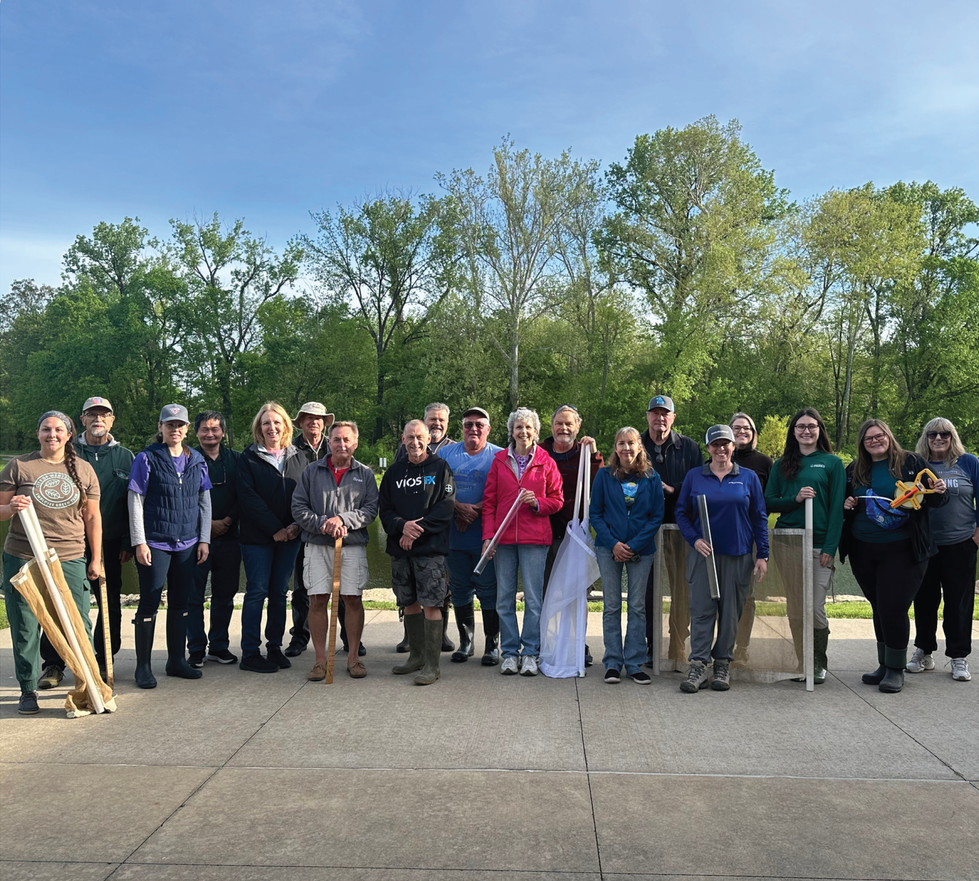
Featured above is a photo of some members of the Peruque Creek Watershed Alliance during a Volunteer Water Quality Monitoring even. Photo by City of Wentzville.
Learn about Show Me Snails in our latest Monitoring Minute
Show Me Snails Results (2020-2024)
By Hannah Griffis, Volunteer Citizen Science and Education Coordinator, and Caleb Bolin, Science Specialist, Mollusk Program
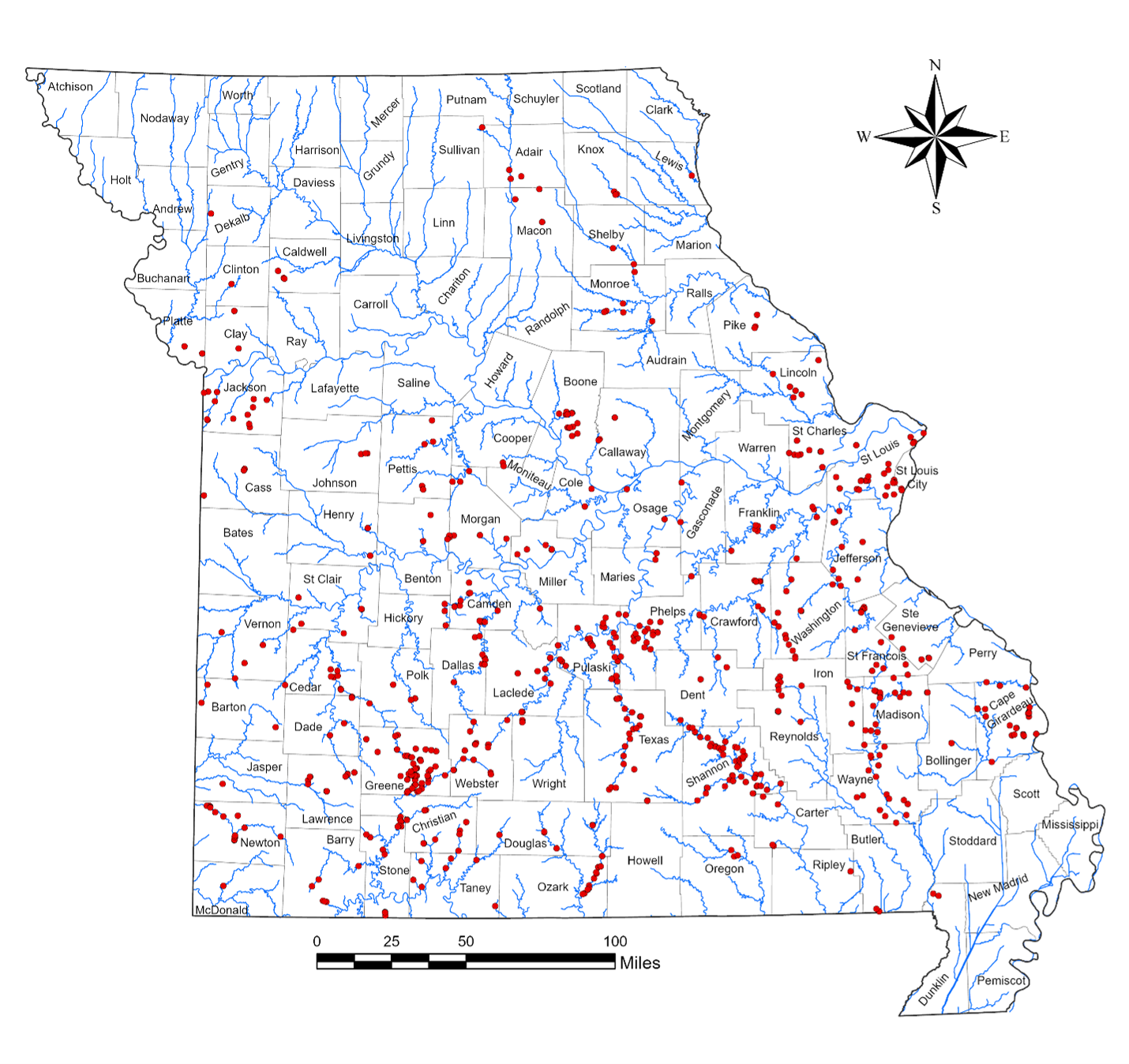
Featured above is a map of the collection sites surveyed by volunteers as part of the Show Me Snails program from 2020-2024.
In 2020, in partnership with Missouri Department of Conservation biologists, Missouri Stream Team started Show Me Snails. The program aimed to collect occurrence data for freshwater snails to add to a statewide dataset and provide data for a new ammonia water quality standard being adopted and now being implemented in Missouri. The program was paused in 2025 so the data collected so far could be analyzed. Here we present a summary of the data collected in the first five years of the program.
From 2020 to 2024, volunteers collected 798 samples from 603 unique locations across 77 counties and St. Louis City in Missouri. Within the samples, a total of 8,861 live snails were collected representing at least 16 different species. The majority of the snails collected were Elimia potosiensis (64%) followed by Physella spp. (25.7%), Pleurocera acuta (4.3%), and Planorbella trivolvis (2.2%). All other taxa comprised 3.9% of the specimens collected. Volunteers also collected three species on the Missouri Species of Conservation Concern Checklist: Campeloma crassulum (SU); Ladislavella elodes (S2); and Leptoxis arkansensis (S1). Learn more about Missouri Species of Conservation Concern here.
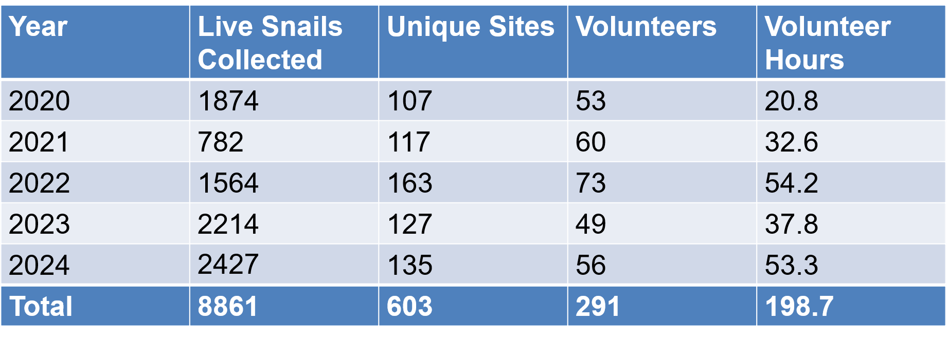
Featured above is a table summarizing the snails collected and volunteers' effort for Show Me Snails from 2020-2024.
The majority of collections being dominated by a few taxa is likely due to several factors, including the ubiquity and abundance of a handful of species in the small-to-medium sized streams and ponds volunteers tended to sample, and a high concentration of sites in the Ozarks. We did not provide guidance on where to collect snails, and you can see in the map of the sites that there are large areas of the state that are not represented in this data. In the future, sampling at more diverse sites, such as in larger rivers, wetlands, and other unique habitats, and including more sites in North Missouri, the Bootheel, and different Ozark stream systems may yield additional species and provide more information about the composition of our aquatic gastropod communities. Also, the ammonia water quality standards were updated this year (learn more here), but that does not mean the program is ending. Next year, we hope to provide new direction in the program to start filling some of the gaps in the data and include more volunteers in the collections. Look out for an email from Stream Team early next year if you want to get involved!
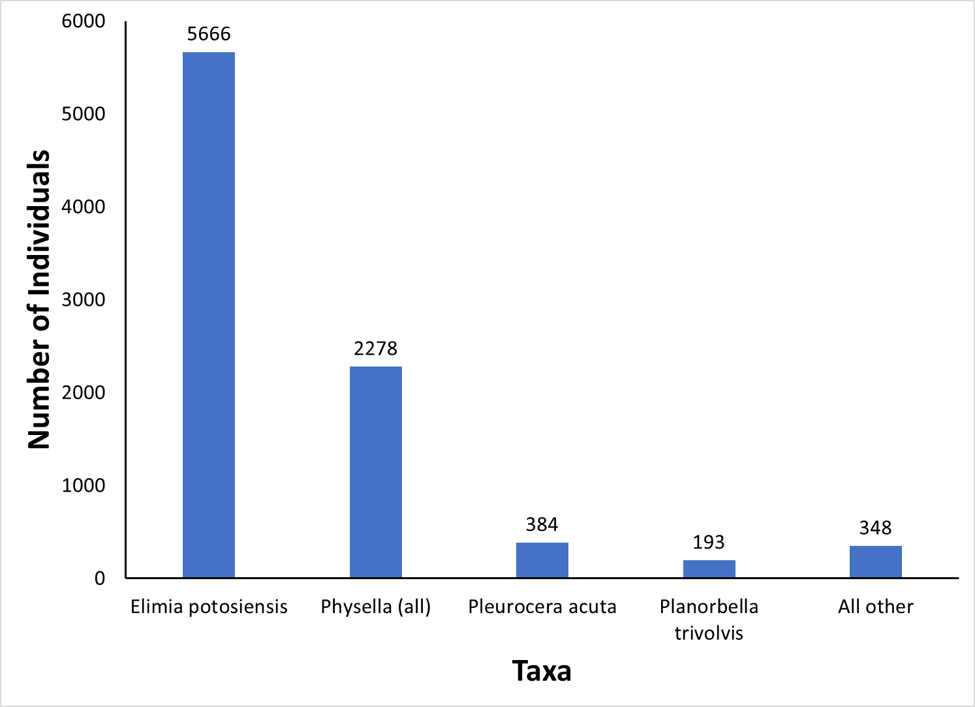
Featured above is a bar graph showing the most prevalent snail taxa found during 2020-2024.
Catch up with teams around the state with the Riffle Review
Riffle Review - 7,307 Teams strong
A quarterly glimpse of Stream Team activities - in the last quarter, Missouri Stream Team volunteers reported:
- 337 Total activities
- 2,182 Total participants
- 7,628 Hours
- 32.6 Tons of trash collected
- 49 Water quality monitoring trips
Team Snapshots
Want to see your team highlighted in the newsletter? Remember to submit photos with your activity reports!
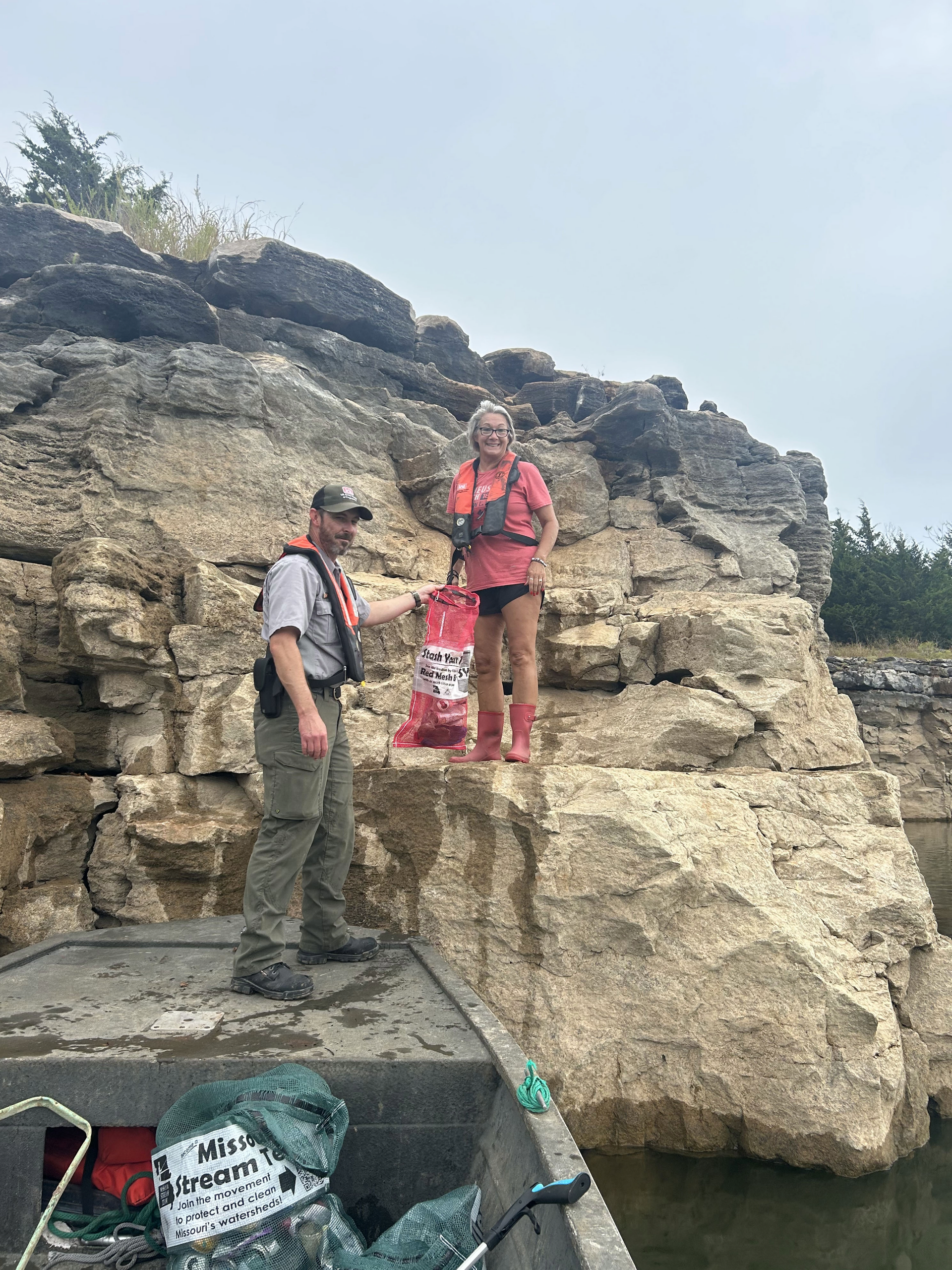
US Army Corps of Engineers at Stockton Lake - ST#3132
The US Army Corps of Engineers at Stockton Lake hosted their 30th Annual Stockton Lake Cleanup, which is always the second Saturday in September. Volunteers cleaned up along the rocky shoreline, Crabtree Quarry, the beaches, boat ramps, and trails, and divers cleaned up below.
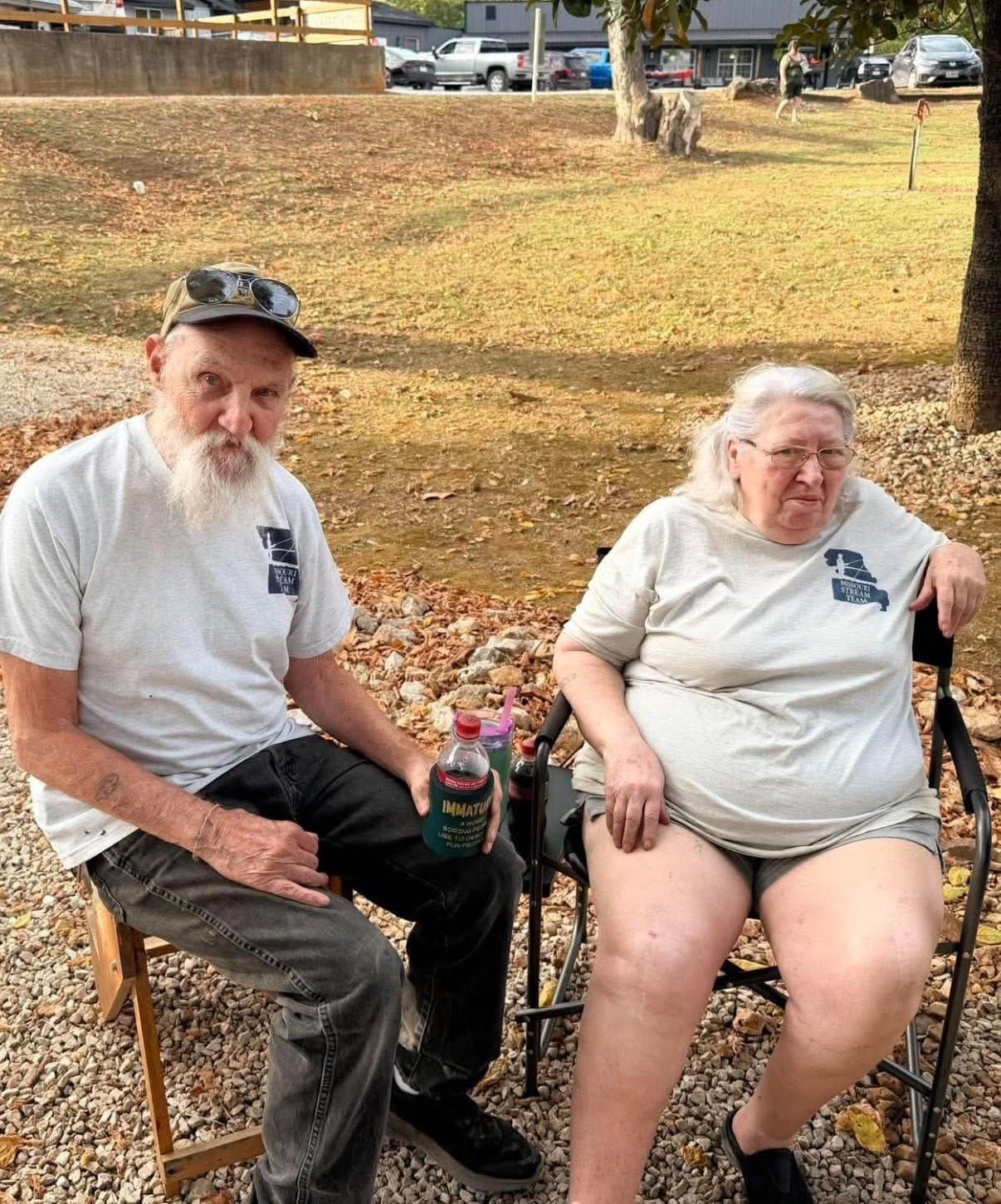
Upper Jacks Fork River Rats – ST#713
Ted and Pat Haviland attended the National Public Lands Day with the Ozark Riverways Foundation and Stream Team Volunteers. Their mentoring of the next generation of Stream Team Volunteers shone through at the picnic and after-party at On the Rock in Eminence after completing the Jacks Fork River Cleanup.
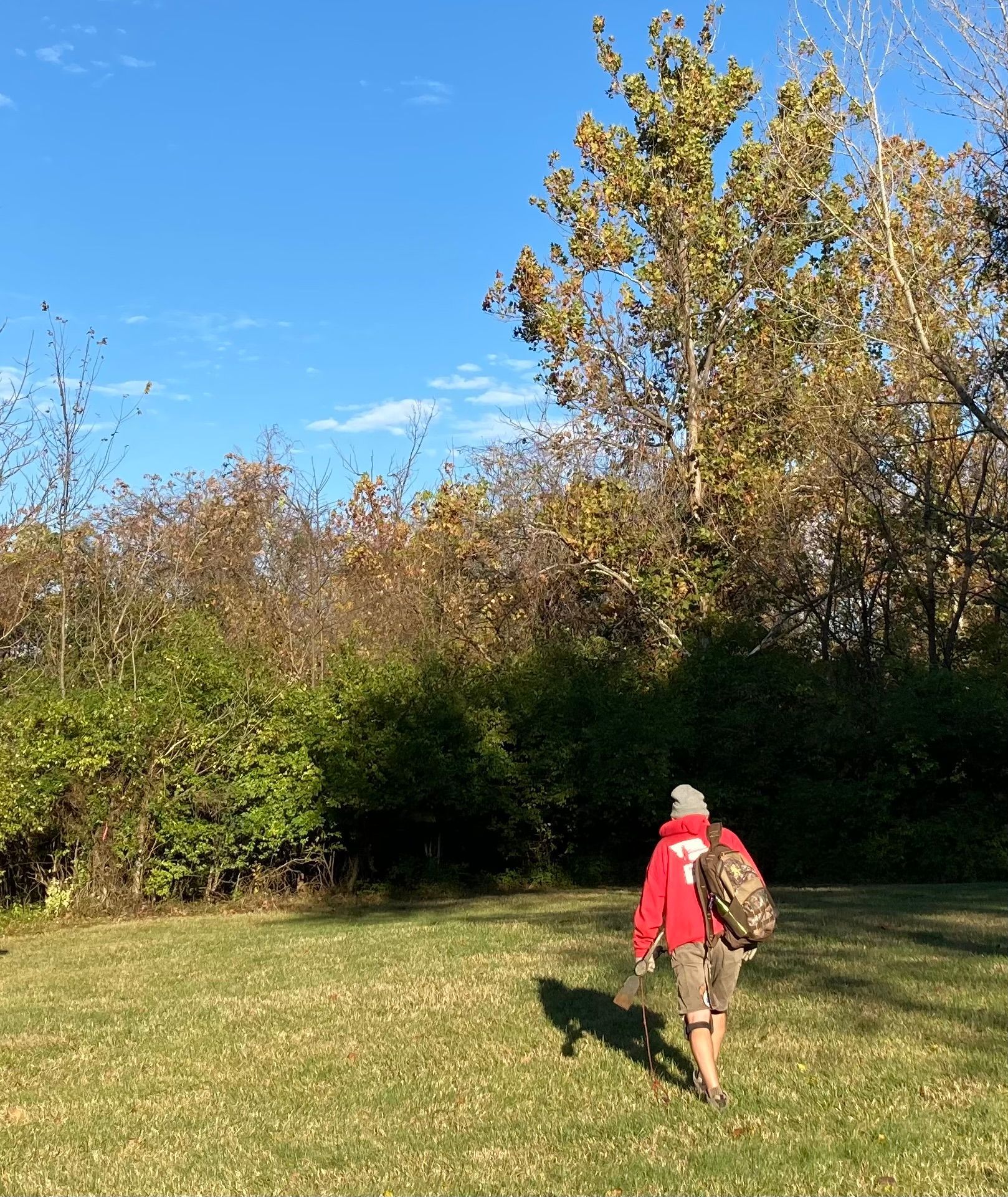
De Soto Car Shop – ST#1995
The DeSoto Car Shop, Thomas “Tommy” Mazurek’s Stream Team, volunteered, for the last time, at the Race for the Rivers to assist canoers and kayakers getting out and transporting their vessels up the ramp so they could load them up to take home. Tommy passed away recently, leaving behind memories and friendships that will ensure. As our St. Louis Stream Team Coordinator Brian Waldrop shared, “I will always cherish all those moments we spent together, all that laughter we shared, all those stories we told. Farewell, my friend!"
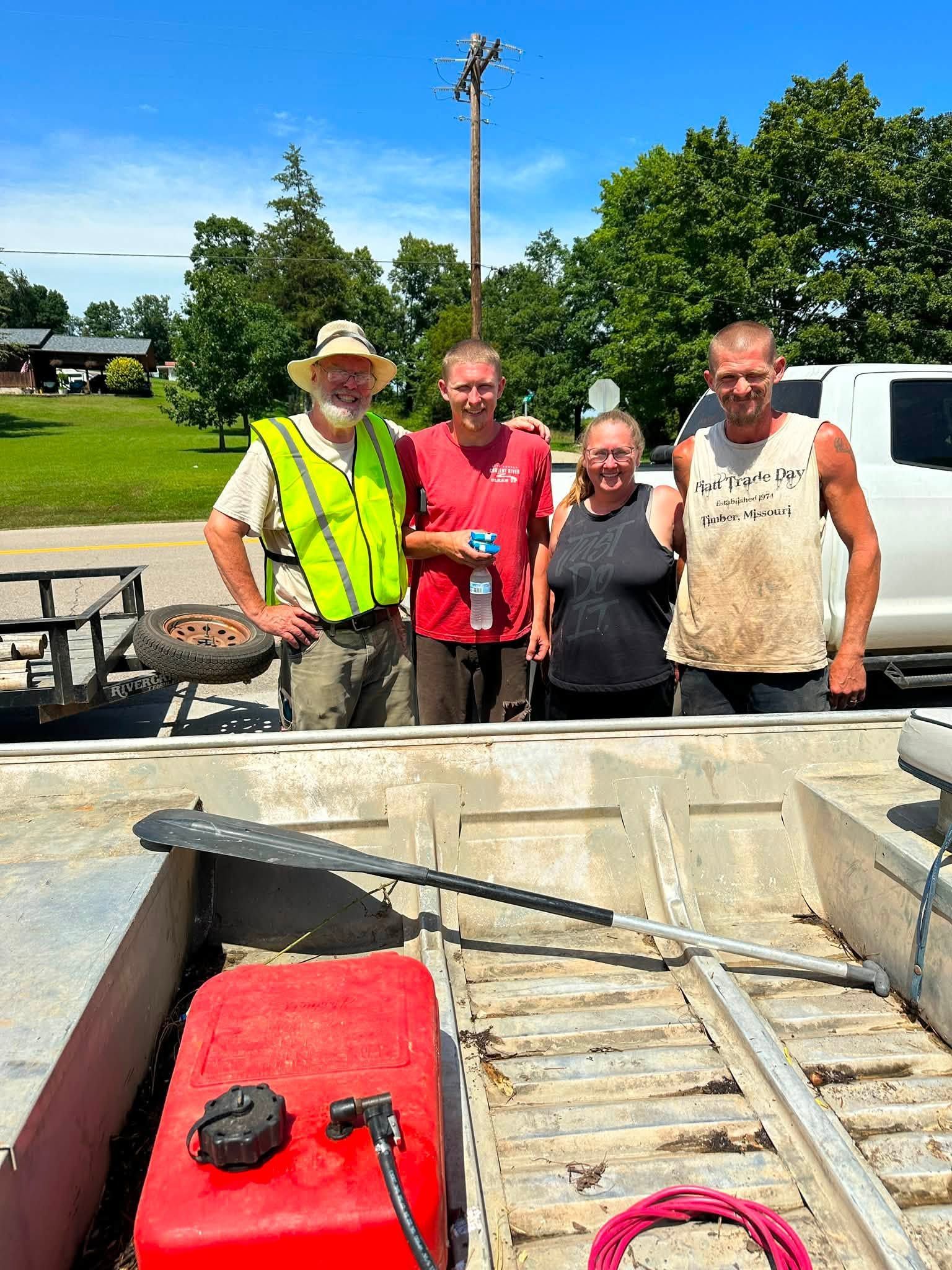
Current River Power – ST#4205
Rick Mansfield and his Current River Power Stream Team began planning for a massive cleanup soon after the waters fell in the Black River. With only one month of planning, Rick and crew had an amazing turnout on August 15th, despite the hot, humid day. Locals from Lesterville, surrounding cities and counties, MDC, and Stream Team Volunteers braved the conditions to start the cleanup process. This is the first of many cleanups, and it will take years to complete. West, Middle, and East Forks of the Black River were covered, generating 30.09 tons of trash.
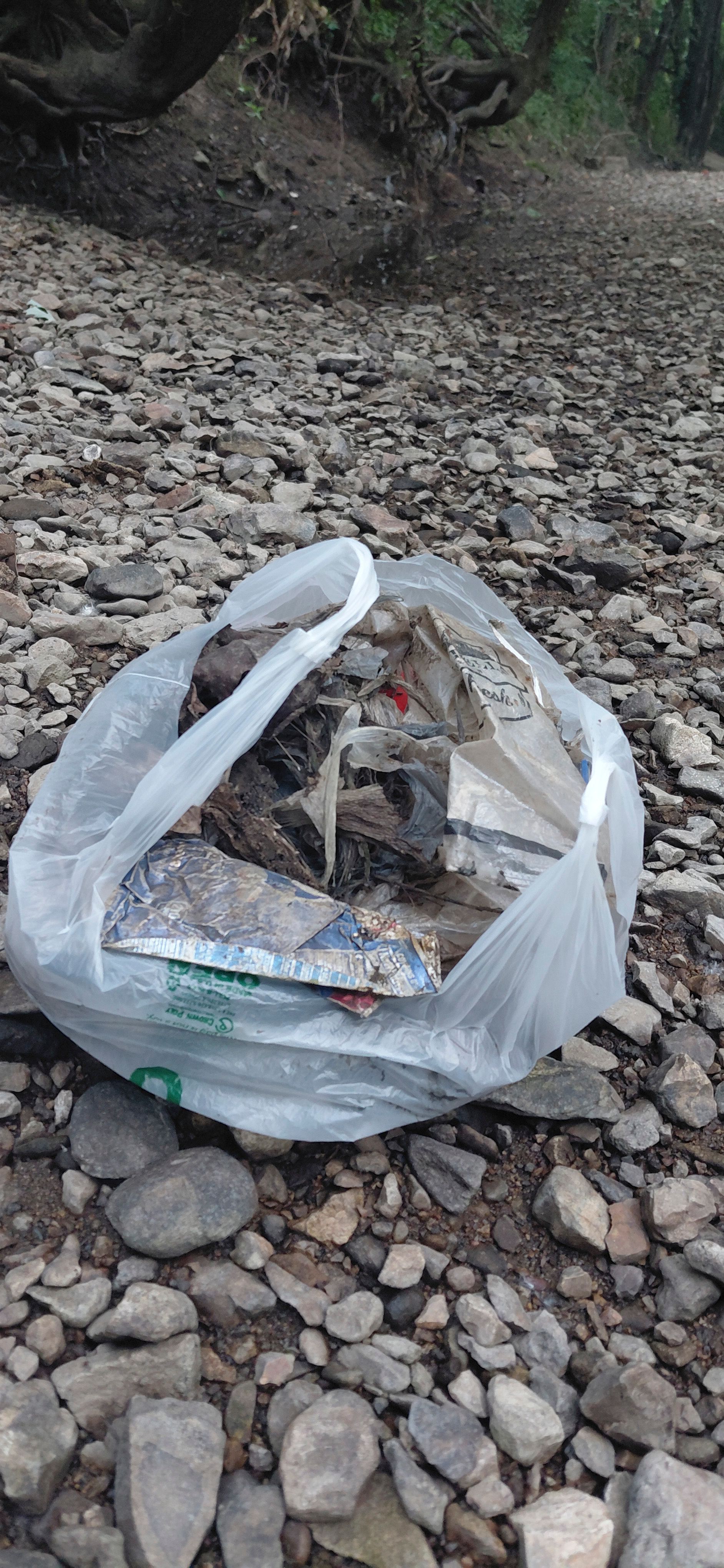
Hannibal Stream Team – ST#4705
Rebecca Romig and her Hannibal Stream Team 4705 proves that you can make a difference in just a short time—even during a lunch break. The team found plastic, broken glass, and even an old piece of leather from the shoe factory along Bear Creek.
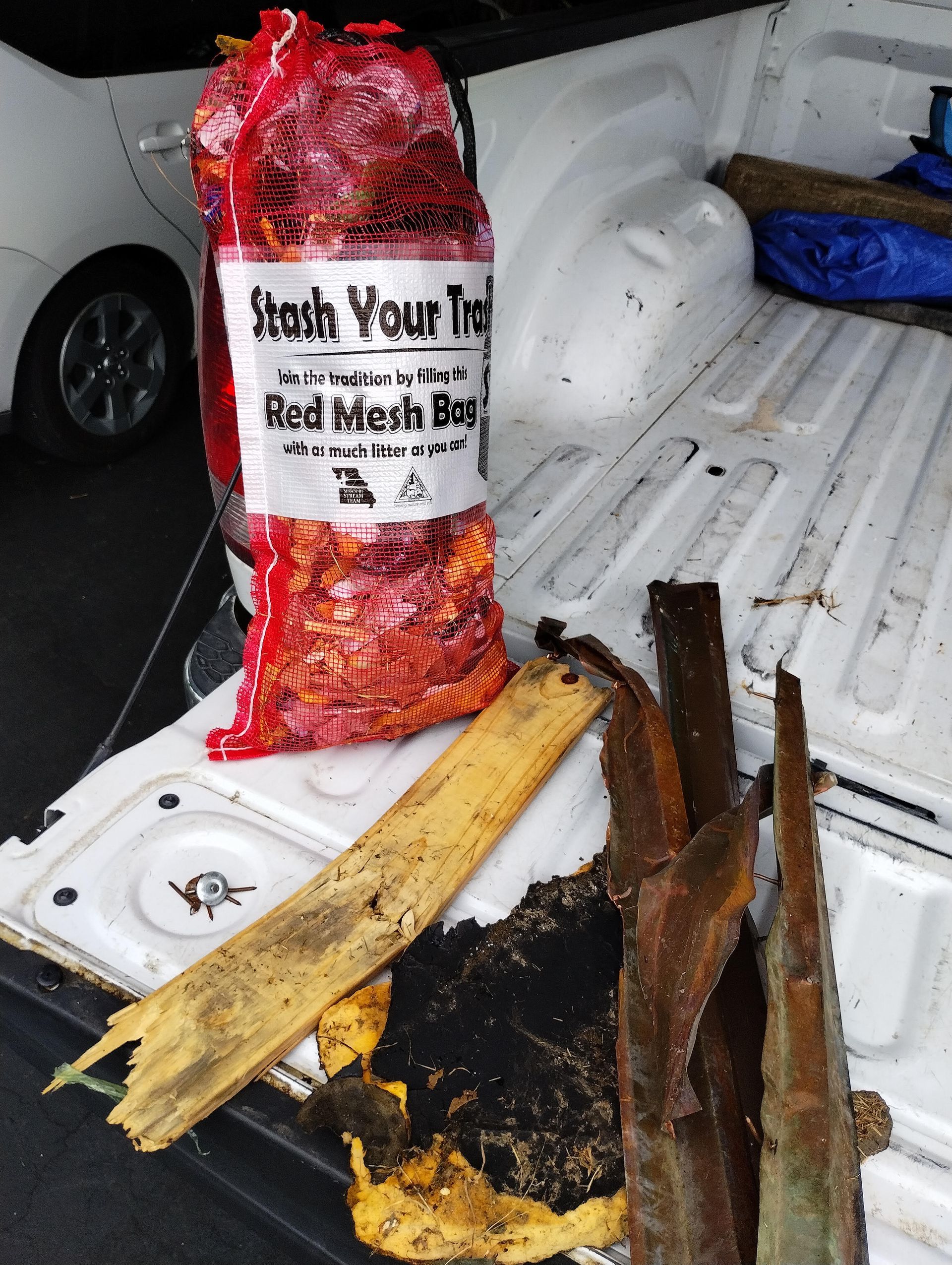
Prairie Tiger Stream Team - ST#7271
Staci Harrison with the Prairie Tiger Stream Team 7271 volunteered to pick up lots of small foam pieces, plastic, and other trash. They also collected steel roof flashing, drip edge roofing nails, cap nails, wood, and a big piece of foam. Lawn mowers can really tear up foam balls and scatter them into many smaller pieces.
The 100 Club
A highlight of Teams that have contributed more than 100 hours in the last quarter -
| Team Number | Team Name | Hours |
|---|---|---|
| 1875 | Missouri River Relief Inc. | 1,102 |
| 1365 | James River Basin Partnership | 561 |
| 1 | Roubidoux Fly Fishers Association | 329 |
| 7051 | The Benders | 288 |
| 7275 | TINYS CLEAN STREAM | 288 |
| 6248 | Restore the Joy Stream Team | 266 |
| 7174 | Trash Splashers | 254 |
| 6279 | AmeriCorps Seniors Stream Team | 240 |
| 3895 | Manchester Parks Department | 225 |
| 6323 | Ozark Riverways Foundation Stream Team | 184 |
| 7112 | KC Parks Ambassadors | 167 |
| 5645 | St. Francois Brigade | 154 |
| 7295 | cleanNsober | 153 |
| 7152 | Fairground Park For All | 142 |
| 3802 | sTrEAMWORK | 140 |
| 7247 | Wards at Deer Creek | 140 |
| 7175 | The Kayak Kracken | 134 |
| 6994 | Jefferson County Stormwater | 120 |
| 4010 | Nixa Boy Scout Troop 200 | 120 |
| 4260 | City of Saint Joseph Water Protection | 111 |
| 6796 | Peruque Creek Watershed Stream Team | 110 |
| 4606 | Eyers' Stream Team | 102 |
| 6160 | Trash and Treasures | 101 |
Looking for opportunities to help Missouri Streams? Need help recruiting volunteers? Check out our Calendar of Events for activities near you or to advertise your event.
Get Excited about Activity Prizes
Quarterly Activity Prize Drawing - Prizes for next Quarter
Semi Annual Canoe Drawing!
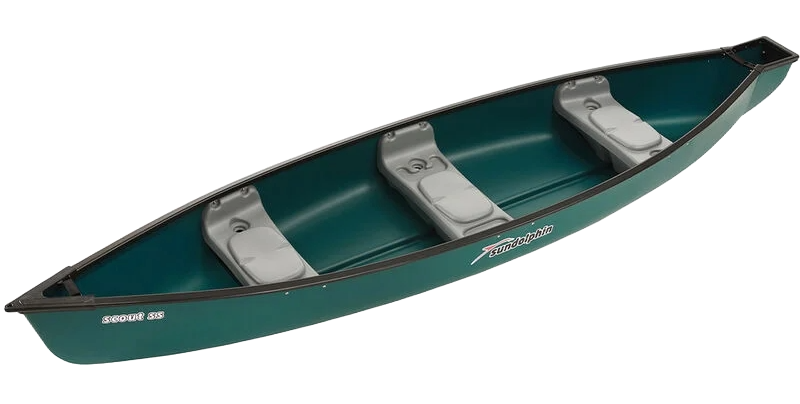
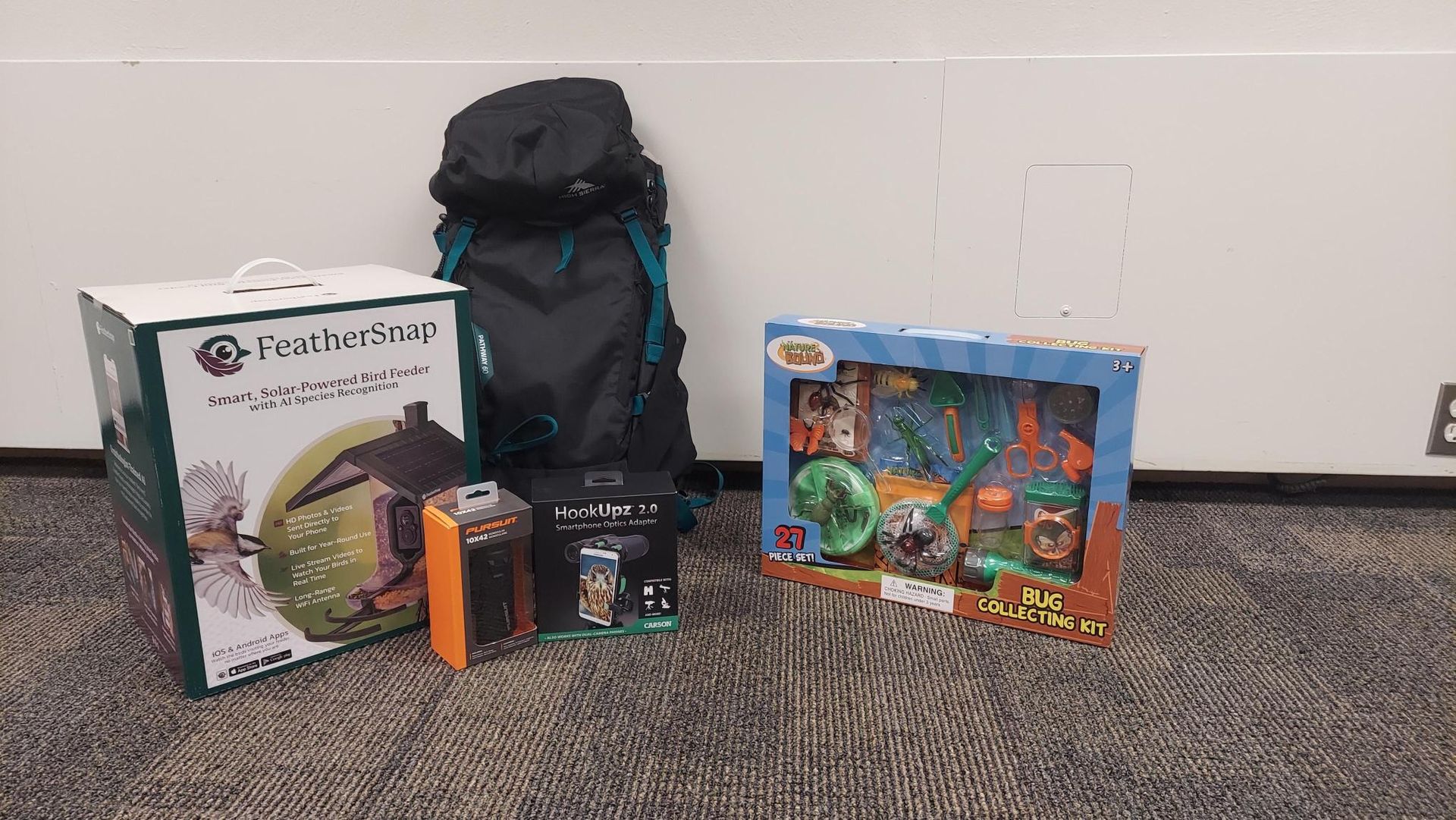
Quarter Prizes:
- Smart, Solar-Powered Bird Feeder
- 60L Hydration Backpack
- Monocular and Smartphone Camera Adapter
Quarter Youth Prize:
- Bug Collecting Kit
Fill out an Activity Report for your past or upcoming events, and you could win a prize next quarter!
If you ordered supplies in advance, please don’t forget to report your accomplishments after your event. Missouri Stream Team relies on your reporting to continue to get funding!
Read the Latest Coalition Corner
Coalition corner
Last Call to Provide Input for our Strategic Planning Process – let us know how to improve what we do!
By Mary Culler, Executive Director of Stream Teams United
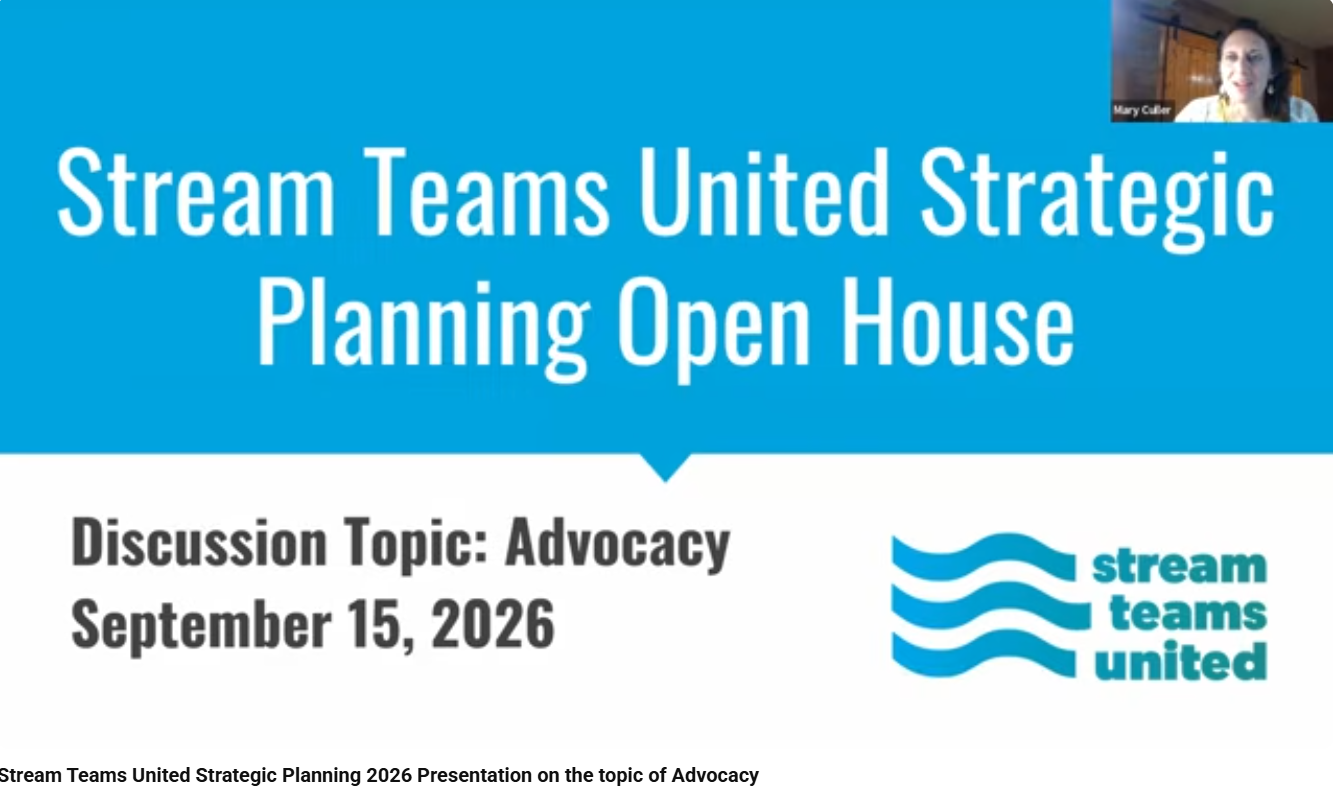
Featured above is a photo of one of the Strategic Planning Sessions Stream Teams United staff held in September.
Stream Teams United was formed as a Coalition of Missouri Stream Team Associations in 1999. Our purpose has been to bring Missouri Stream Teams together, assist with communications and collaborative projects among Missouri Stream Teams, and facilitate efforts for Missouri Stream Teams to advocate for clean and healthy streams in Missouri. The organization was a fully volunteer organization for over a decade. In 2010, Holly Neill, the first Executive Director of the organization was hired. Under Holly’s leadership, we helped jump start the Missouri Clean Marina Program, advocated for an additional state slogan “The Great Rivers State”, created educational materials, began our advocacy program, created the Paddle MO program, and assisted Stream Team Associations with a variety of grant projects.
In 2018, we undertook a strategic planning process, by meeting with Missouri Stream Teams and the general public at listening sessions throughout the state, and through an open survey. Fast forward to 2026, in the last eight years the organization has continued existing projects and grown to support several full-time staff. As we begin to think about the next decade of our organization, we are again seeking the input and feedback from the Missouri Stream Team community and the general public.
In August and September, we hosted four “Open House” Zoom sessions to receive feedback and ideas for the update of our strategic plan. Each open house session focused on one of the three pillars of the Missouri Stream Team Program: Education, Stewardship, and Advocacy. We also hosted a fourth open house session to discuss development, growth, and fundraising of the organization.
If you missed the “Open House” sessions, take a look at the recordings of the presentations from each meeting. Each recording is only about 10-12 minutes long, and these recordings provide a good overview of the work of Stream Teams United during the last eight years, since the last update of the organization’s strategic plan.
We love Missouri’s rivers and streams and work daily to facilitate education, stewardship, and advocacy for our state’s water resources. If you are reading this article, we want to hear from you! Our survey is open for any feedback or ideas, through the end of October. Please let us know any ideas you have for the future work of the Stream Team Coalition, what you think we do well, and what we could do better. Your participation is greatly appreciated! If we are new to you, sign up for or bulletin at www.streamteamsunited.org!
Fall Statewide Challenges
Fall into Action with Statewide Challenges!
Fall is here and it is time to get outside and take on two statewide Stream Team Challenges!
Nightmare in the Understory: A bush honeysuckle removal challenge
October 1 - October 31
Join us for the second annual Nightmare in the Understory bush honeysuckle removal challenge throughout October! Participate & win prizes!
How to Participate:
- Learn how to spot the villain and remove it.
- Scout out your battle site. Be sure to get landowner permission first.
- Recruit volunteers.
- Enter an Activity Report for Planning your Event.
- Hack away! Slay the villain!
- Report your accomplishments in an Activity Report. For your activity, select Honeysuckle Hack: Nightmare in the Understory.
Award Categories:
- Most square-footage hacked
- Largest single plant removed
- Best before & after picture
- Best dressed - Stream Team themed costumes encouraged!
- Beauty from the Beast - show us what you can create with the honeysuckle you've hacked!
Wild Waterway Rescue
November 1 - November 15
All Stream Teams across Missouri are invited to join in this statewide challenge. Wild Waterway Rescue brings our communities together to help protect the waterways that connect us all. During the first two full weekends of November, join the challenge by cleaning up your community and the lakes, streams, and rivers near you. This statewide event is co-sponsored by Missouri Stream Team and accredited state zoos and aquariums.
How to Participate:
- Organize a stream or land clean up.
- Recruit volunteers.
- Enter an Activity Report for Planning your Event.
- Pick up lots of trash!
- Report your accomplishments in an Activity Report. Make sure you select which zoo you want to donate your trash to when picking your activity type! Please include a photo of your team and trash collect with your Activity Report!
The zoo with the highest average pounds of trash per participant donated will win. We will share your submitted photos on the Missouri Stream Team Facebook page from Sunday, December 6 to Saturday, December 12. We will announce the zoo winner on Friday, December 11, at 10 am on our Facebook page.