
Summer Edition
New Title
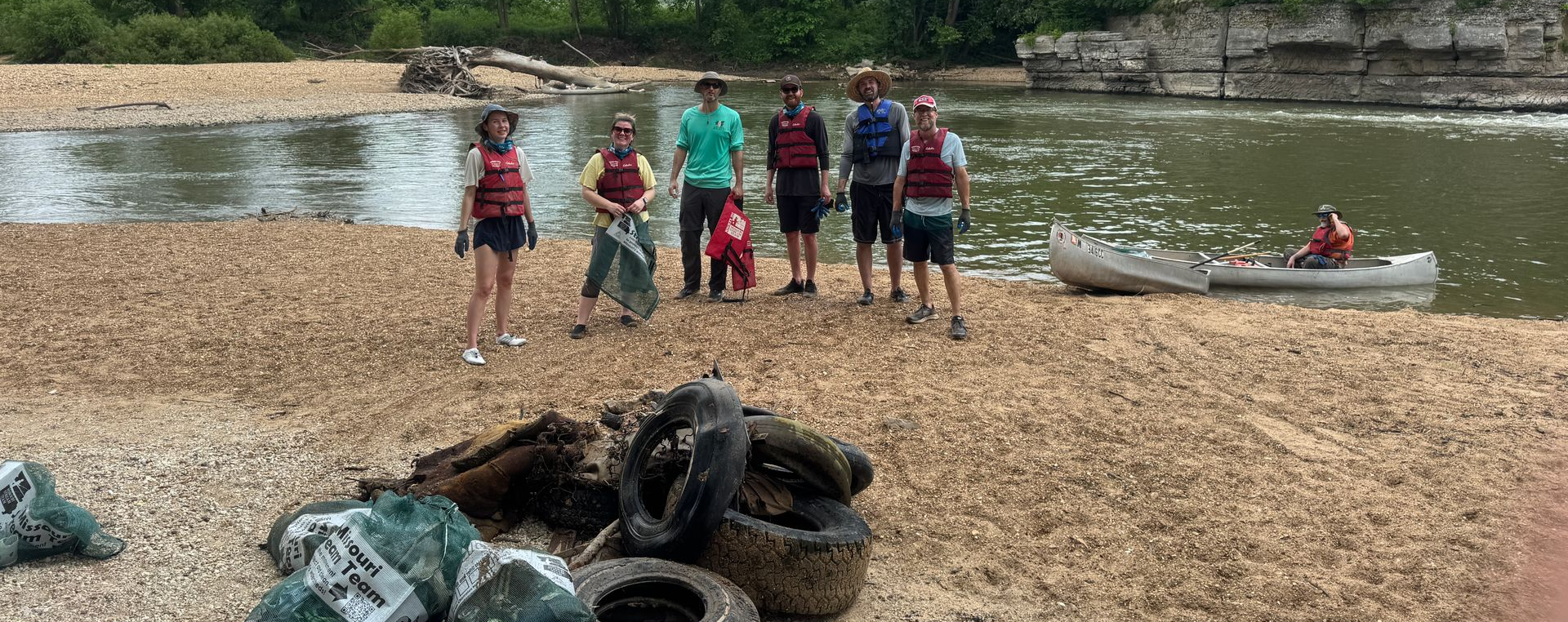
Featured above is a photo a litter pickup on the Big River during National Rivers Month (June).
The Spirit of the Stream Team Program by Brian Waldrop
The Spirit of the Stream team program
By Brian Waldrop, Volunteer Engagement Specialist
It’s been quite a journey since volunteers first set out to improve Missouri’s streams and floodplains. That all started back on February 1, 1989. In case you’re wondering, that was over 37 years ago. The spirit of those early days is still going strong, because of you.
At first, volunteers like you focused on the parts of the river they cared about most. Many helped out at their favorite fishing or swimming holes, in their towns, or even right in their own yards. As time went on and teams connected across Missouri, volunteers started traveling to help in new places. This group grew into a close-knit family, all working to make a difference for the environment and in each other’s lives. For many, being part of Stream Team has become a way of life.
Behind the scenes, there’s a core team supporting you. Some of you may recognize us, while others may only know us by name. We want you to know how much we value all the hard work of our volunteers.
First, let’s hear from our DNR VWQM team:
Randy Sarver - “Those who can, do. Those who can do more, volunteer. Volunteers do more than they have to because they want to make a difference for a “good” cause. It is a joy to work with Stream Team volunteers. I can’t think of a better day than working with people who want to be involved and make a positive difference in this world."
Garrett Frandson - “Stream Team isn’t just where my employment is pointed but also represents the hope that people can bring about change in the world through mutual support & action, that this can be done from the ground up instead of through high-level action. People are personally motivated to try to make a difference in the world, even in one small corner with one small subject, and that’s pretty inspiring. Volunteers are people who believe in themselves, their community/communities, and the vision of the world they hold, and they put their time into trying to bring that vision about.”
Next, here are some words from our MDC Citizen Science and Education team:
Hannah Griffis - “I grew up in a program similar to Missouri Stream Team, and it had a strong influence on how I view the world and my career path. Moving to a new state and starting a new job can be difficult, but the staff and volunteers here at Missouri Stream Team have made me feel at home in the program.”
Pam Taylor - “Stream Team volunteers are very committed and do the heavy lifting that make this program what it is. I like being able to help and provide support to volunteers so that they can continue do that work. It's nice to be a part of this community of people that share the same values I hold.”
And finally, let’s hear from the Volunteer Engagement team:
Cheri Becker - “I really enjoy connecting with volunteers on a personal level; helping them see how they can make a difference in their community and watershed, and how they are a part of nature and not separate from it. It is very rewarding to know we are making a positive impact on the lives of others and the natural world.”
Brian Waldrop - “Back in the day, as a Stream Team volunteer, I was taught by the founders of the program, along with the epic volunteers who, too, were learning tips and tricks along the way. It is my time to continue sharing the valuable lessons learned, successes, and failures with all the dedicated volunteers. The spirit of volunteering has never left my heart.”
How can you help us? Right now, it’s more important than ever to send in your activity reports. These reports are what keep us and the program going. Long live the Stream Team Program.
-Brian Waldrop, Volunteer Engagement Specialist
See you on the river - Farewells from Staff
Jeff Cantrell
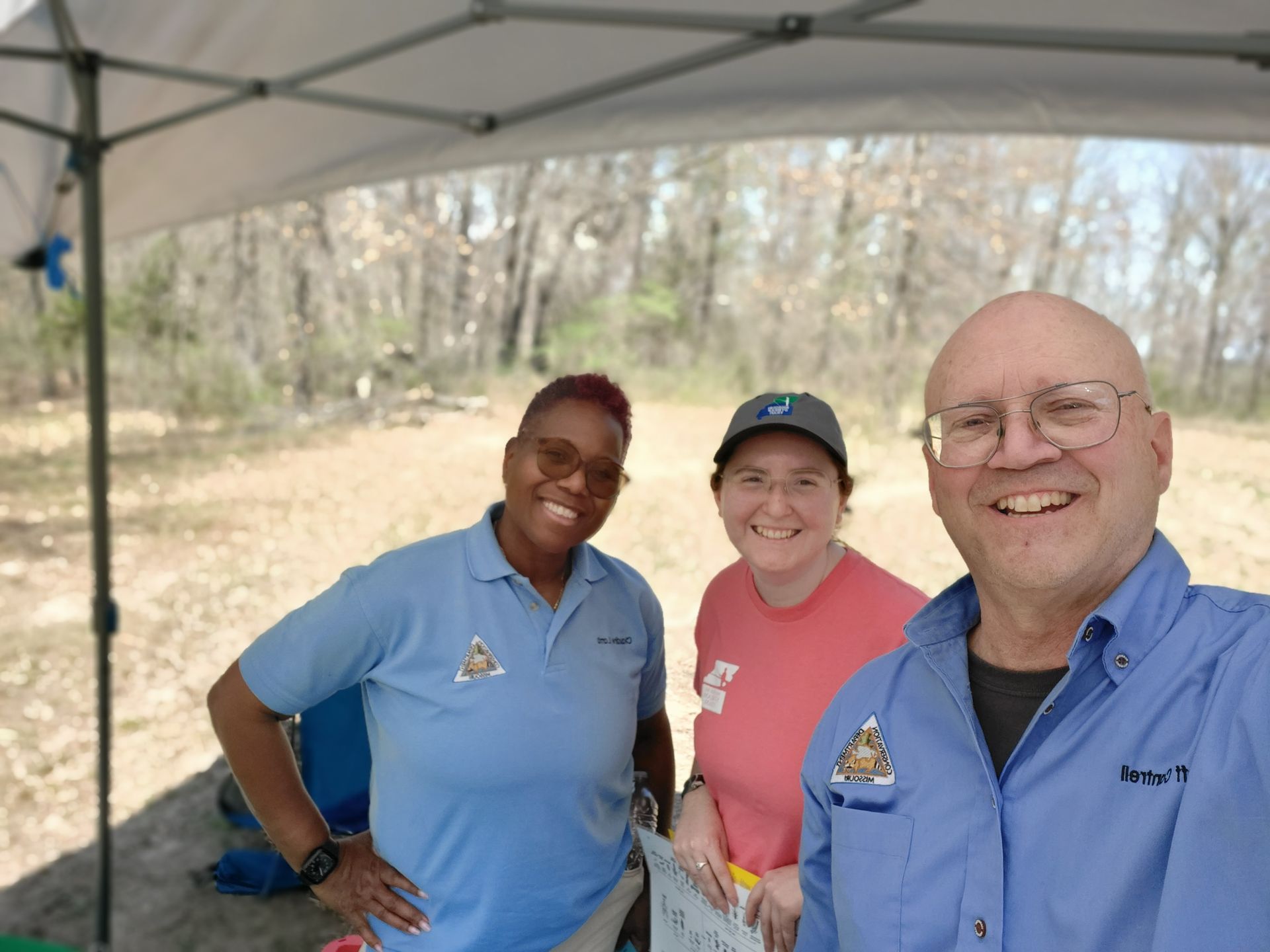
A foreword from Rebecca O'Hearn:
Jeff has been a cherished member of the Missouri Stream Team family since the very beginning, and a treasured employee for the past 29 years. Jeff has also served as the Chapter Advisor for the Chert Glades Master Naturalist Chapter since the very beginning. In 2024, he joined the Missouri Stream Team staff, bringing the same enthusiasm and kindness to Stream Team volunteers. Although his time on staff was short, his passion for conservation and the friendships he built along the way have left a lasting impression. As Jeff begins his retirement from the Missouri Department of Conservation, we know he'll continue to be an advocate for healthy streams and the people who care for them. We're grateful for everything he's shared with the Stream Team community and wish him many adventures in the watersheds that he loves. Before he heads off to his next chapter, we invite you to read Jeff's own reflections on his conservation journey.
- Rebecca O'Hearn, Volunteer Programs Manager
A message from Jeff Cantrell:
I’ve been surrounded by stewards of the environment since high school. I immediately was drawn to people who followed the belted kingfisher down the river by canoe and was in awe of the colorful stream fishes of the Ozark waters.
Over the years, I’m fortunate to have volunteered beside these stewards for an array of projects ranging from the conservation department restoring the bald eagle population, and fire ecology to planting willows for stream stabilization. I was introduced to stream and drinking water issues professionally in the mid1980s when the Watershed Committee of the Ozarks was starting up. Now the organization is called The Watershed Center, and they are still a forerunner in water conservation. Much appreciation to Loring Bullard for that “grassroots” encouragement.
Out of all my volunteer contacts, the passion of Missouri Stream Team volunteers has been marked with success after success. I love being around the camaraderie. As a volunteer I started the team (#153) on Galloway Creek nearly 37 years ago. I’m so impressed with the networking, volunteer passion, and grit statewide by all the teams and staff. Throughout my naturalist, conservation educator and field biologist jobs I’ve never been far from watershed topics. My last three years with the conservation department were with the Missouri Stream Team program itself, and daily your heartfelt dedication has grounded me. I truly feel that positivity and with that said, I’m starting my retirement from the Missouri Department of Conservation this July. However, I’ll continue to be in the stream habitat circles and an advocate for our native fishes, riparian birds, and other wildlife. I’m so appreciative to my CFM, MDC, and DNR “in the water” peers, and you the volunteers. I look forward to visiting and working with so many of you at future functions with Stream Teams United (STU) and the Conservation Federation of Missouri (CFM). I’m excited for free time on Indian Creek, the Elk, and the Bryant. All kindred spirits are welcome to stay in touch, thank you for an amazing journey
- Jeff Cantrell, Volunteer Engagement Specialist
Learn about the stream bed in our latest Monitoring Minute
Reading a Stream Bed
By Garrett Frandson, Stream Team Volunteer Water Quality Monitoring Program Coordinator
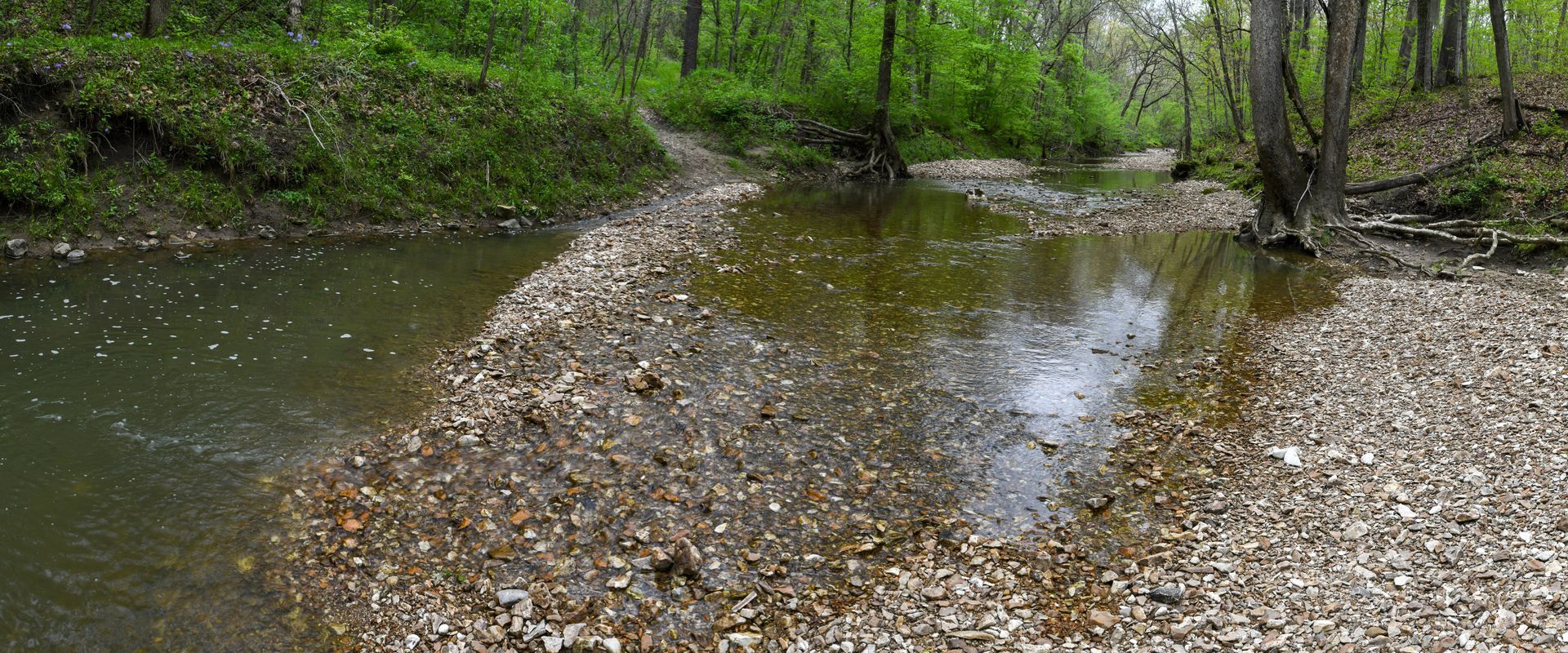
Featured above is a photo of Turkey Creek in Boone County. Heavy flow moved this substrate until the water went down and lost its energy.
One of the fields we ask about in the Visual Survey is the "bed composition of riffle." This field has options for silt/mud, sand, gravel, cobble, boulder, and bedrock. Have you wondered why we ask this, or what the substrate of a stream bed can tell you about a stream?
First, let's cover the riffle specifically before moving into the bigger picture. Riffles are where streams are steeper, shallower, and faster-moving. There's relatively lots of energy in a relatively small space! This energy makes riffles great at moving stuff that's in the water, like rocks of various sizes. The smaller the bit of sediment, the less energy it takes to move: silt can be stirred by the slightest current, but boulders stay in place in all but the strongest of flows. Riffles have no trouble moving out small sediment, just leaving behind the larger rocks, so finding silt or sand settled at the surface of the bed where it should be easily carried away can point to upstream erosion issues. It's the same reason we care about cobble embeddedness in riffles!
So, to recap: riffles should typically not have much small sediment like silt or sand because that part of a stream is energetic and moves small stuff out easily. What about other parts of a stream? How is a stream bed arranged?
As a bottom line, streams will move what they can and not move what they can't: this is part of a concept called “stream competency.” Riffles are where they can move a lot; pools are where they can't move much. What accumulates in these and other parts of a stream reflect the capability of the stream to move material there and what material is available to move. You won't find leaves accumulating in a pool in a desert stream with no nearby plants, and you (probably) won't find boulders in a riffle in the same sandy desert!
When I go out and look at my favorite stream, I notice that some areas have large rocks, some have small rocks, some are full of leaves, and there are some boulders (some sections even have no sediment accumulating, leaving just bare bedrock!). This, along with my familiarity with the stream's watershed, tells me there's either not much large rock getting broken apart to make its way into the stream or that it gets broken apart quickly. Either way, there's sediment of every size represented somewhere. The watershed is mostly forested, so lots of leaves and organic debris ends up in the stream, too. Where exactly all this stuff ends up depends on where rocks and organic material are able to enter the stream and what parts of the stream are moving fast, moving slow, going around bends, or running into large obstacles in the channel.
One particularly cool feature to look for is what I call a “sediment shadow.” on the downstream side of large rocks, look for piles of small sediment: water gets turbulent when it hits those big rocks, and turbulent running water can’t hold bits of sediment as easily as smooth running water can, so the sediment falls out downstream of it, casting its “shadow!”
There's a lot of complexity to exactly how water flows and how it and the physical stream channel shape each other! To repeat a bottom line that summarizes some of it, streams will move what they can and not move what they can't. Next time you're out monitoring, take a look around and try reading what the stream bed is telling you!
2025 Data stars
Congratulations to all the water quality monitors who earned a Data Star award this year! These dedicated volunteer citizen scientists submitted at least two rounds of complete and accurate macroinvertebrate, water chemistry, discharge, and visual survey data sheets. We have many first-time Data Stars, and several monitors/projects have earned this award multiple times. Each person and team on a project listed here has demonstrated great commitment to gathering data on water quality in Missouri and are starting or continuing a years-long data record. First-time Data Stars are awarded a Data Star pin, and repeat Data Stars are awarded their choice of some Stream Team merch. Thank you for all you do, Data Stars!
First Time Data Stars
Allan Breite
Norman Cox
Eric Dannenmaier
Barbara Elmore
Ivan Fall
Rhonda Ferrett
Dave Kusmec
Mark Latz
Steve Murray
Shaun Ohlms
Rebecca Read
Mary Rozier
Repeat Data Stars (Team Leads)
William Bockenkamp
Josette Coffman
Curt Dudley
Michael Engle
Michael Hey
Jim Hinds
Steve McCarthy
Peggy Menke
Rosemarie Mier
Gateway Trout Unlimited Project (Michael Hey)
Grand Glaize Assessment Project (Cori Westcott)
Brenda Switzer
Caroline Toole
Susan Williams
Bob Virag
Catch up with teams around the state with the Riffle Review
Riffle Review - 7,250 Teams strong
A quarterly glimpse of Stream Team activities - in the last quarter, Missouri Stream Team volunteers reported:
- 418 Total activities
- 4,258 Total participants
- 11,131 Hours
- 81 Tons of trash collected
- 75 Water quality monitoring trips
- 1,061 Trees planted
Team Snapshots
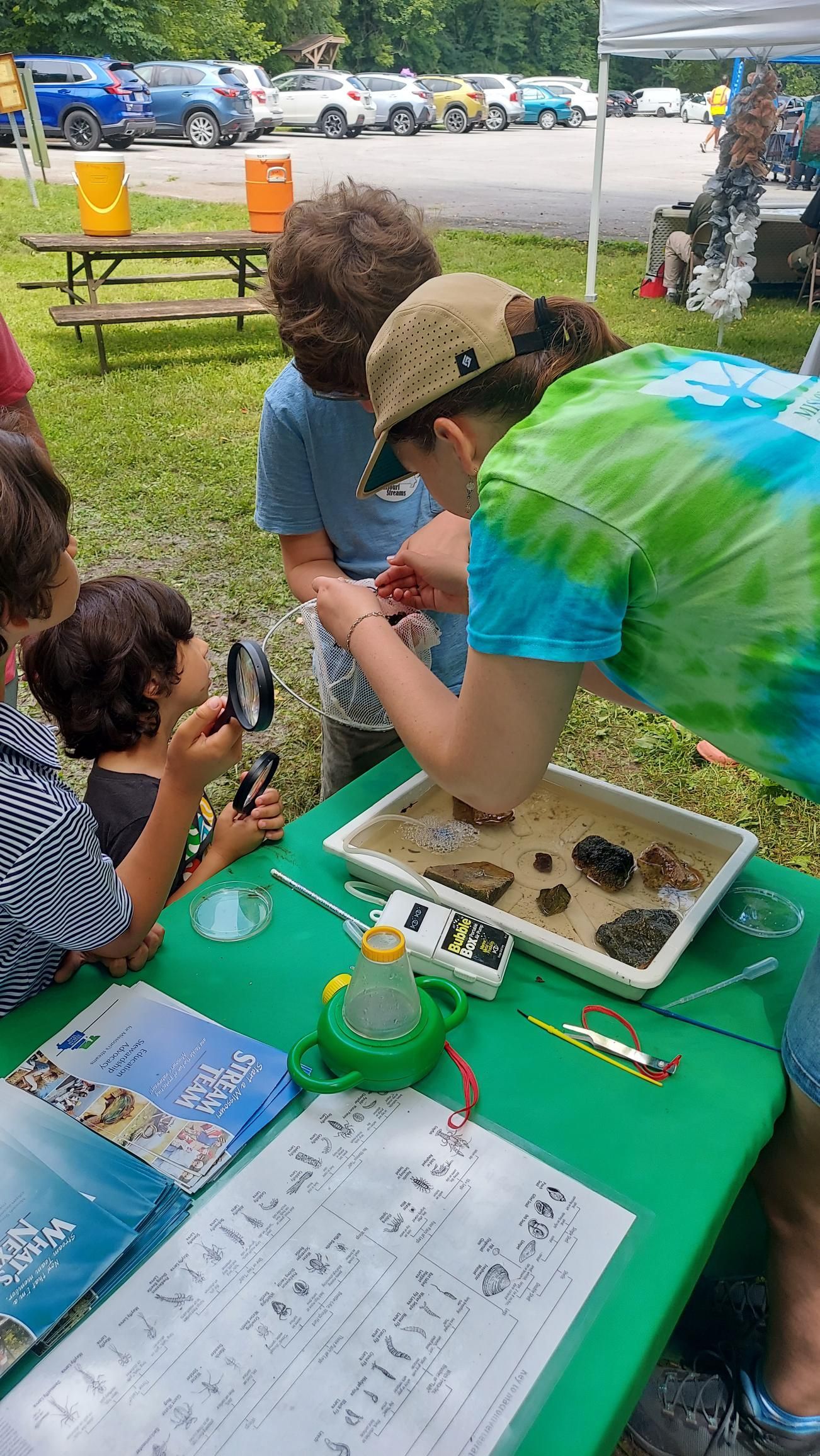
Boone County Stormwater Management - ST#4794
Creek Week brought a week of activities that educated and celebrated water health in June throughout Boone County. This was collaboration though many organizations including the hosts, Greater Bonne Femme Watershed Initiative.
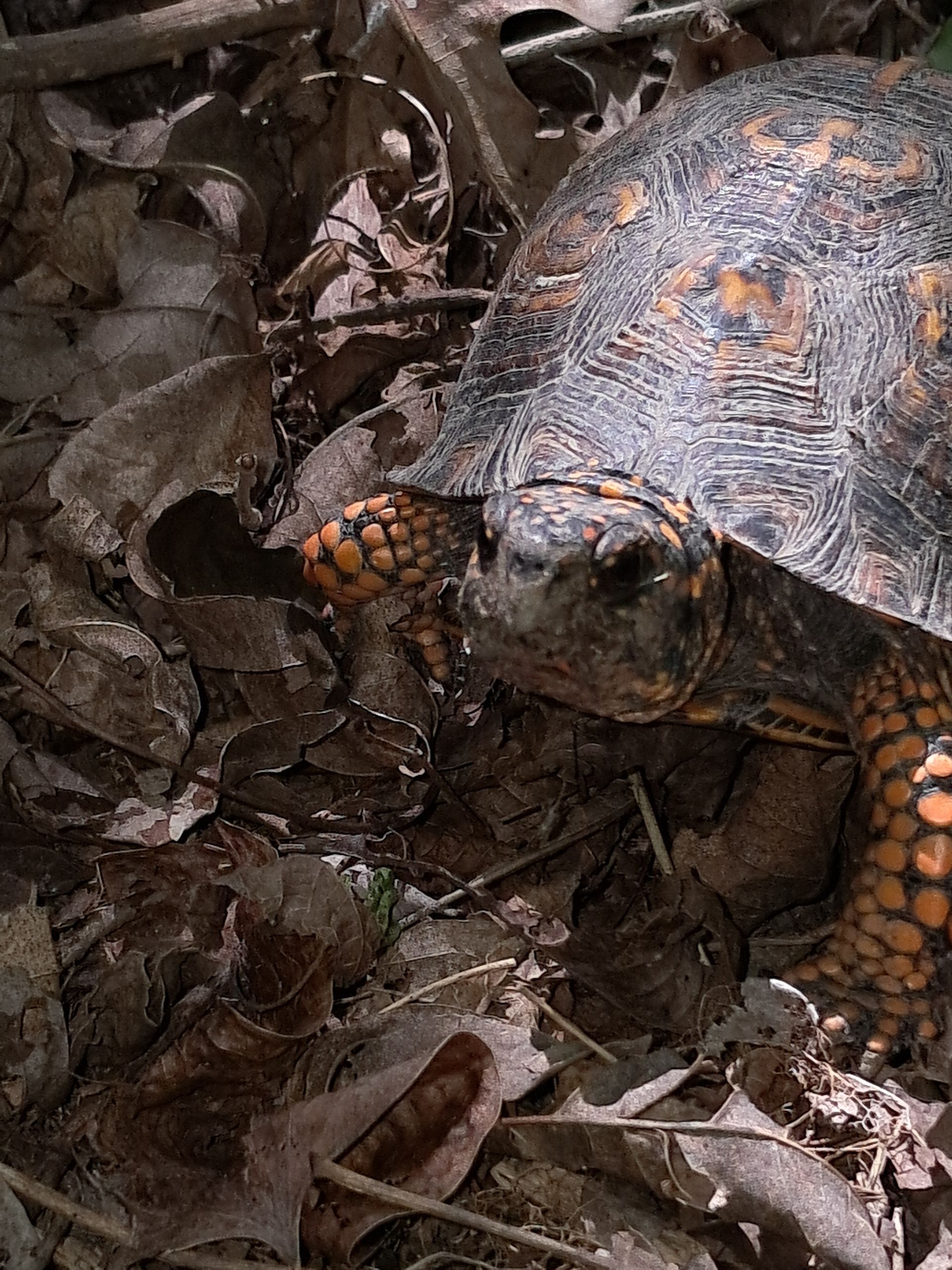
The Rocky Swamp Revival – ST#2763
Joshua and his team, who work on the Main Drainage Ditch #8 down in the Southeast Region, continue to pick up trash, monitor beaver activity, and enjoy the wildlife.
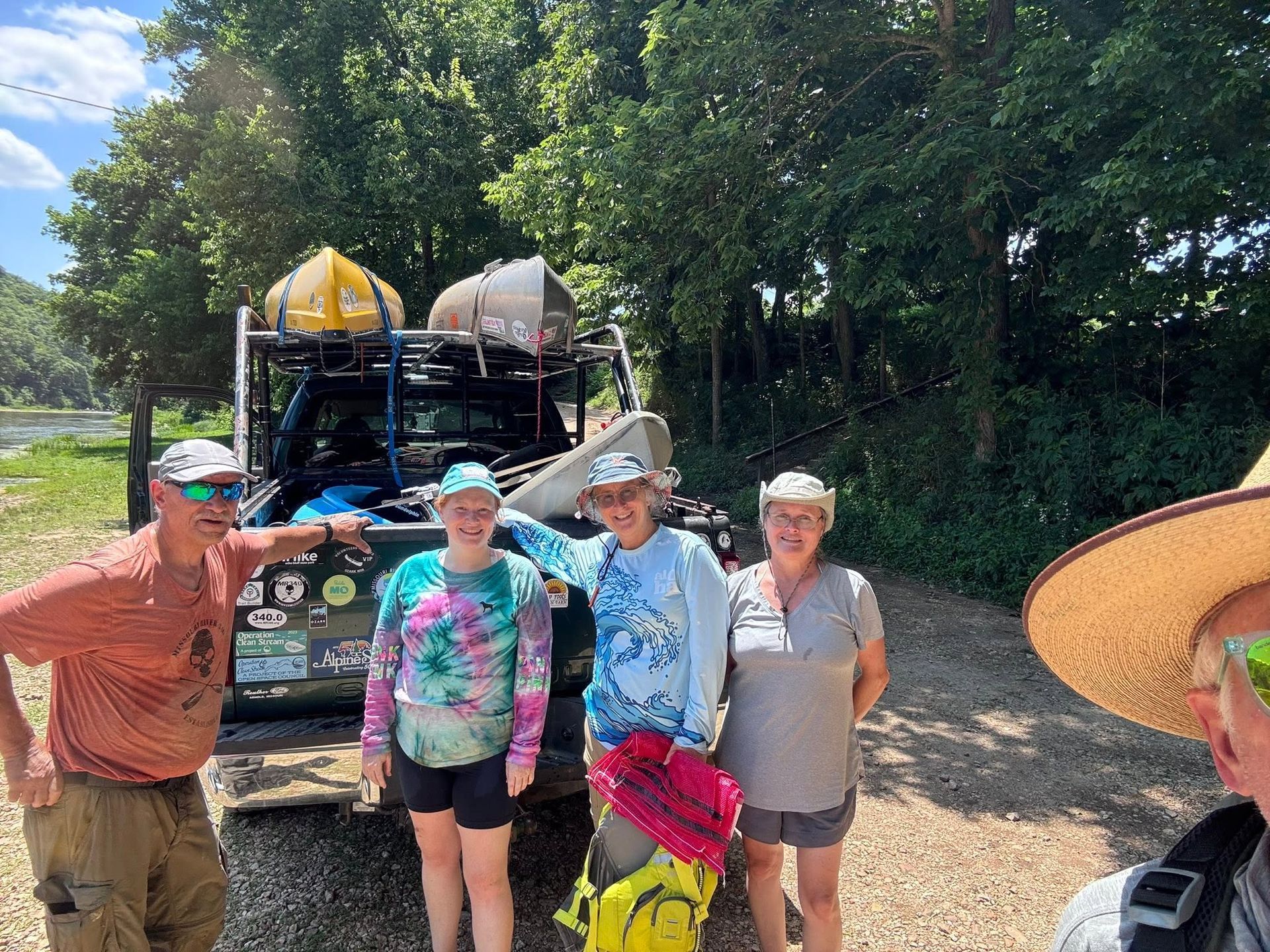
The Upper Current River Cleanup was another success. Dozens of Stream Teams from across the state, ranging from lower three- to upper four-digit numbers, came together for this annual Father’s Day Weekend event from Montauk State Park down to Round Springs.
The 100 Club
A highlight of Teams that have contributed more than 100 hours in the last quarter -
| Team Number | Team Name | Hours |
|---|---|---|
| 5 | Open Space STL | 3,312 |
| 1636 | City of St. Peters | 668 |
| 1365 | James River Basin Partnership | 659 |
| 7178 | Mr. Lynn CMS Stream Team | 572 |
| 6248 | Restore the Joy Stream Team | 522 |
| 728 | Missouri Stream Teams United | 485 |
| 7174 | Trash Splashers | 390 |
| 4922 | The Tireless Cutters | 214 |
| 4529 | City of Jefferson Stream Team | 213 |
| 7157 | Ladue Downs | 195 |
| 5942 | Kansas City Zoo & Aquarium Team | 146 |
| 6796 | Peruque Creek Watershed Stream Team | 141 |
| 2667 | City of O'Fallon | 138 |
| 509 | Missouri Smallmouth Alliance | 120 |
| 3206 | MDC Garbage Guerrillas | 108 |
| 6800 | Missouri Conservation Corps Stream Team | 106 |
Looking for opportunities to help Missouri Streams? Need help recruiting volunteers? Check out our Calendar of Events for activities near you or to advertise your event.
Get Excited about Activity Prizes
Quarterly Activity Prize Drawing - Prizes for next Quarter
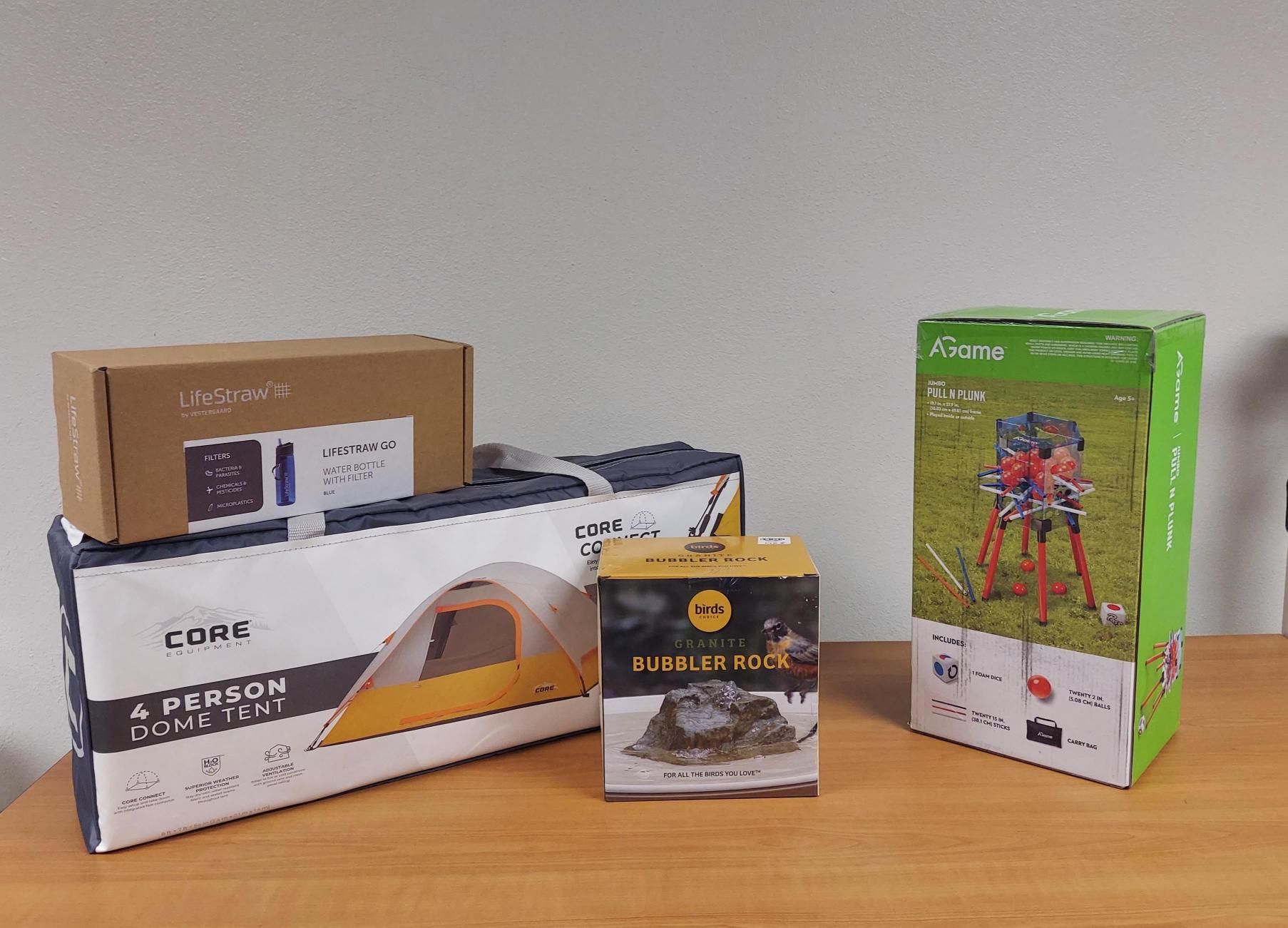
Quarter Prizes:
- 4 Person Dome Tent
- Granite Bubbler Rock
- Lifestraw Water Bottle with Filter
Quarter Youth Prize:
- Jumbo Pull-N-Plunk Game
Fill out an Activity Report for your past or upcoming events, and you could win a prize next quarter!
If you ordered supplies in advance, please don’t forget to report your accomplishments after your event. Missouri Stream Team relies on your reporting to continue to get funding!
Read the Latest Coalition Corner
Coalition corner

Connect With Stream Teams United During The summer and fall of 2026
By Mary Culler, Executive Director of Stream Teams United
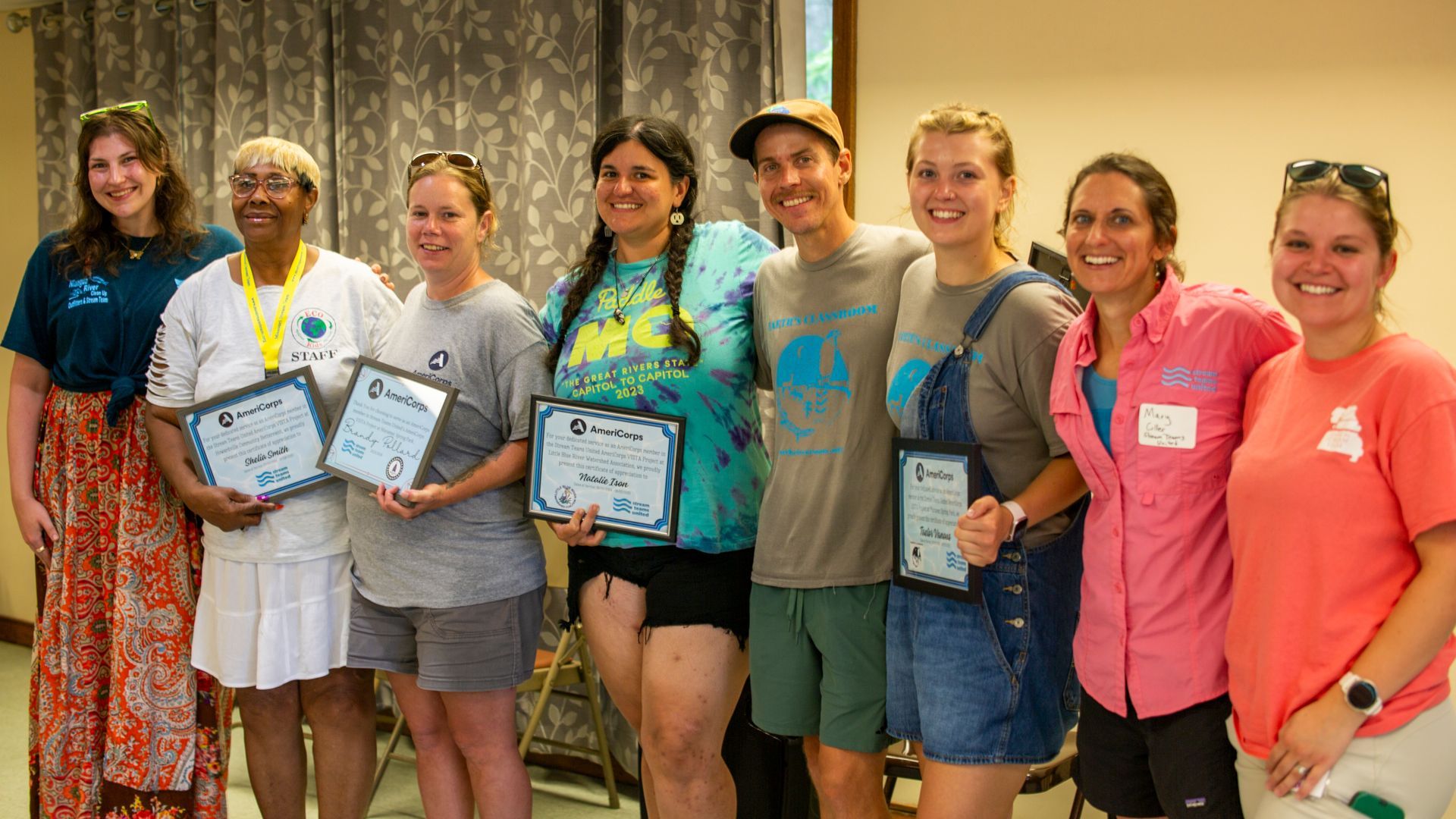
Featured above is a photo of Stream Teams United staff and AmeriCorps Volunteers gather at the 2025 Watershed Celebration at Meramec State Park. Join us this year on July 25, 2026!
As we begin the second half of 2026, our staff and board of directors invite all Missouri Stream Teams to connect with Stream Teams United during the summer and fall of 2026! There are several ways to learn more about Stream Teams United in these next few months. Check out these events and meetings below. We hope to see you at one of these events!
- July 25th: Stream Teams United and Missouri Stream Team Program staff and volunteers are looking forward to our upcoming annual Watershed Celebration at Meramec State Park on July 25th, and the opportunity to spend a day with Missouri Stream Team friends from around the state, share a meal together, and show appreciation to Stream Team members for their significant contributions towards stewardship, education, and advocacy for Missouri’s rivers and streams. Details about the event can be found here: https://www.streamteamsunited.org/watershed-celebration-picnic.html. All Missouri Stream Team members and their families are welcome to attend. We hope to see you there!
- August 11th: Join us at 7 PM for the 3rd Quarterly Advocacy All Stream Team meeting of 2026 – Register here! We will provide a recap of the 2026 state legislative session and discuss topics of interest at local, state, and federal levels. This meeting is held online via Zoom, and is open only to registered Missouri Stream Team members. A general presentation will be recorded to share with those who cannot make it in person, but any general discussion from attendees will not be recorded. Our prior advocacy meetings of 2026 were held in January and March in preparation for our annual advocacy day at the Missouri State Capitol this past April. Tune in on August 11th to learn more about water advocacy opportunities in Missouri and connect with our staff. Register here: https://us02web.zoom.us/meeting/register/CWYYBwFdTpOmIuGtq4An8A
- Find us online on our social media @streamteamsunited. We recently updated our social media handle to match our website domain. We are on Facebook, Instagram, and YouTube @streamteamsunited. If you are not yet following us, visit our pages and Follow and Share! The more people in Missouri who know about Stream Teams United, the more we will be able to disseminate opportunities for people to speak up for clean and healthy rivers in Missouri!
- We are working on updating our organization’s strategic plan this summer and fall. If you visit the Watershed Celebration picnic on July 25th, you will have the opportunity to provide feedback and comments to us at that event. We will also be hosting four online “open house” Zoom meetings later in August and September, to provide opportunities for people to provide ideas and suggestions for the work of our organization. Dates and times of these “open house” Zoom meetings will be announced soon, and sent out to Stream Teams through a StreamGram. Watch for a future StreamGram about our strategic planning process. We are looking forward to receiving your input about the future activities and programs of Stream Teams United!
-Mary Culler, Executive Director, Stream Team United

Update on Tree Ordering Process
Notification of process change
Plan Ahead for Upcoming Tree Ordering Windows
Stream Team volunteers have long used our free tree program to support streamside restoration and improvement projects across Missouri. To better serve volunteers and streamline order processing, we are making changes to the tree ordering process beginning this fall season.
What's Changing?
Instead of accepting tree orders throughout much of the year, Stream Team will now accept orders during two annual ordering windows:
Fall Planting Order Window: August 1-31
Spring Planting Order Window: February 1-28
In addition, volunteers will now submit tree orders directly through the Stream Team Program rather than through the George O. White nursery.
What Do Volunteers Need to Do?
If you anticipate needing trees for a future project, please begin planning now and be prepared to submit your request during the appropriate ordering window.
Steps for Ordering Trees:
- Determine what trees to plant
- Obtain permission of property owner
- Submit a planting plan Activity Report through the Stream Team application using the correct activity type: Planning for events - planting trees
- Submit your tree order using the Stream Team application
- Plant and care for your trees!
- Submit an Activity Report for your tree planting time
Detailed instructions, eligibility requirements, available species information, and ordering procedures can be found on the Activities page on our website.
You can also attend our webinar on August 3rd at 6pm to learn about how to take care of your new seedlings and an overview of the new ordering process. Register here. Use code: 0257.